

Edge Computer Vision: How AI Learns to “See and Decide” Right Where It Matters
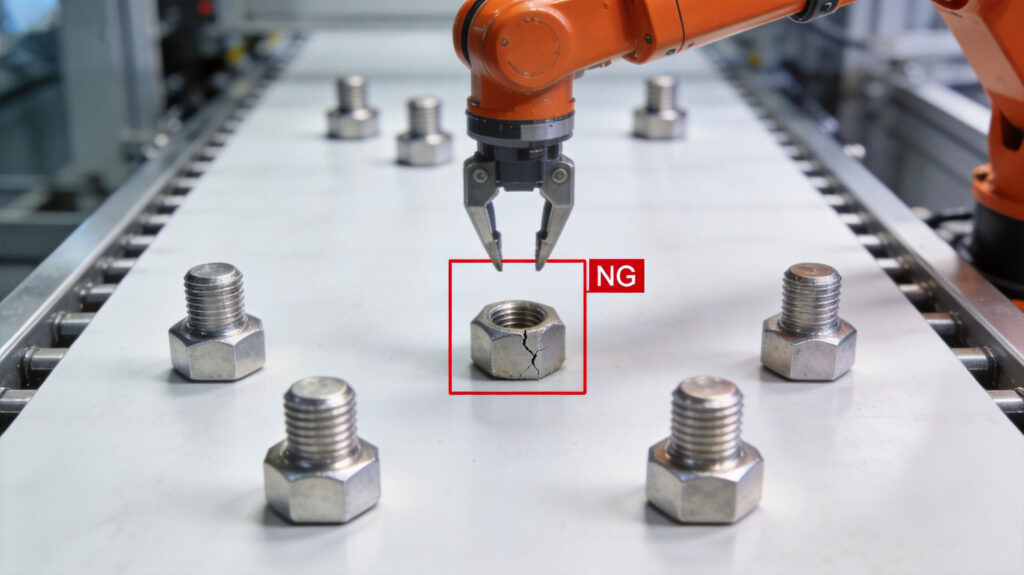
Edge Computer Vision: How AI Learns to “See and Decide” Right Where It Matters Announcements Buyer Guide Comprehensive Tips Occasion Product Review Q&A Tutorials A Defect Caught in 100 Milliseconds On a high-speed PCB assembly line, a camera inspects solder joints as boards rush past at meters per second. Within 100 milliseconds, the system identifies a microscopic solder bridging defect, triggers a rejection signal, and diverts the faulty board—all before the next unit arrives at the inspection station.This decision happens inside a compact industrial computer mounted beside the conveyor. Not in a data center hundreds of kilometers away. If the image data had to travel to a cloud server and back, network latency alone could add 300–500 milliseconds of delay. On a fast-moving production line, that gap means missed defects, scrap waste, and quality escapes.This is the core problem that edge computer vision solves: when AI needs to see something and act on it immediately, sending data to the cloud and waiting for an answer simply doesn’t work. The processing must happen locally, at the edge, in real time. And the hardware that makes this possible is evolving from bulky legacy industrial controllers to something far more compact—the industrial-grade Mini PC. What Is Edge Computer Vision? To understand edge computer vision, it helps to break the concept into three layers. Computer Vision: Teaching Machines to “See” Computer vision is the field of AI that enables machines to extract meaningful information from images and video. It powers tasks like object detection (identifying and locating items in a frame), image classification (sorting products by type or condition), and behavioral recognition (detecting whether a worker is wearing protective gear). Modern computer vision relies heavily on deep learning models, which deliver high accuracy but demand significant computational resources to run. Edge Computing vs. Edge AI Edge computing is the broad principle of processing data where it is generated, rather than sending everything to a centralized cloud or data center. Think of it as setting up a package locker in your neighborhood instead of routing all deliveries through a distant distribution hub.Edge AI takes this one step further: it means running AI models directly on the local device, so the system can make intelligent decisions—classifying, detecting, predicting—without any round trip to a remote server. Extending the analogy, it’s as if the package locker could automatically sort parcels into the correct compartment on its own. Edge Computer Vision: The Convergence Edge computer vision combines these two ideas. It means deploying visual AI models on a local computer positioned right next to the cameras, so the entire loop—capture, analyze, decide—happens on-site, in milliseconds, with no dependency on cloud connectivity. Why Edge Computer Vision Matters: Four Core Advantages 1. Millisecond-Level Response In manufacturing quality inspection and robotic vision guidance, latency is not a convenience metric—it’s a hard requirement. Edge inference delivers deterministic response times in the 10–100 millisecond range, completely independent of network conditions. A cloud round-trip that takes 300ms+ is simply too slow for a conveyor line running at high speed. 2. Data Privacy and Security Factory process parameters, inspection images, and production data often represent core proprietary knowledge. An edge-based vision system processes all of this data locally. Only the results—pass/fail flags, anomaly counts, summary statistics—leave the facility. This architecture is increasingly important as data sovereignty regulations (such as the EU AI Act and China’s Personal Information Protection Law) place stricter limits on cross-border data transfers. 3. Bandwidth Efficiency A typical industrial vision deployment may involve dozens of high-resolution cameras generating continuous video streams. Transmitting all of that raw footage to the cloud would consume enormous bandwidth. Edge processing reduces outbound data volume by 80% or more, because only analysis results and flagged images need to be transmitted—not every frame of video. 4. Network Resilience Edge devices operate independently of continuous network connectivity. If the network goes down, the local vision system keeps running. For production environments where downtime translates directly into financial loss, this resilience is essential. Where Edge Computer Vision Is Already Working Smart Manufacturing and Quality Inspection Visual inspection systems on production lines must identify defects in real time—PCB solder joint analysis, semiconductor wafer defect detection, automotive surface finish checking. The industrial computer running the inspection model sits directly beside the line, processing images from multiple high-resolution cameras and communicating with PLCs to trigger sorting or rejection mechanisms. These systems demand stable, continuous computing performance and the ability to interface with multiple industrial cameras simultaneously. Construction Site Safety and Industrial Protection Edge vision systems deployed at construction sites and industrial facilities can continuously monitor whether workers are wearing hard hats, safety vests, and other protective equipment. These deployments often operate outdoors or in harsh environments, placing high demands on the hardware’s temperature tolerance and dust resistance. Robotic Vision Guidance Collaborative robots (cobots) require real-time visual feedback to locate workpieces and make grasping or assembly decisions within 20–50 milliseconds. The robot controller typically communicates with the edge computer via serial interfaces (RS232/RS485), requiring the computing platform to offer rich industrial I/O connectivity. Smart Transportation and Urban Surveillance Intelligent cameras at road intersections perform license plate recognition, traffic flow counting, and violation detection—analyzing everything locally and issuing instant alerts. These roadside deployments must operate reliably across wide temperature ranges and often run on non-standard power supplies. The Hardware Platform for Edge Computer Vision: Why the Industrial Mini PC The Need for a Form Factor That Fits the Gap Edge computer vision presents a distinctive hardware paradox: it needs enough compute power to run deep learning inference, yet it must be compact enough to deploy beside a production line, inside a control cabinet, on a street pole, or even inside a vehicle.Traditional options don’t fully fit. Embedded development boards offer limited compute and struggle with complex vision models. Standard servers and legacy industrial PCs deliver the power but are too large, too power-hungry, and too inflexible for tight deployment spaces.The industrial Mini PC—also known as an edge AI box or embedded computer—fills this gap precisely.
Edge Computer Vision: How AI Learns to “See and Decide” Right Where It Matters Read More »