Why Windows 11 IoT Enterprise is the Paradigm Shift for Industrial Computing Hardware
The Convergence of IT and OT
In the rapidly evolving landscape of Industry 4.0, the demarcation line between Operational Technology (OT) and Information Technology (IT) is becoming increasingly porous. Industrial PCs (IPCs) are no longer isolated units controlling assembly lines; they have evolved into critical nodes for cloud connectivity, edge analytics, and big data processing.
Microsoft’s Windows 11 IoT Enterprise represents more than a mere incremental update; it is a systemic re-engineering designed to address the trifecta of modern industrial challenges: Cybersecurity, Interoperability, and Longevity. This article provides a comprehensive analysis of why transitioning to this platform is a strategic imperative for hardware manufacturers and system integrators.
1. Zero Trust Architecture: A Robust Cybersecurity Posture
Industrial Control Systems (ICS) have increasingly become prime targets for ransomware and sophisticated cyberattacks. Windows 11 IoT Enterprise elevates security to the hardware level, redefining industrial defense through a “Zero Trust” methodology.
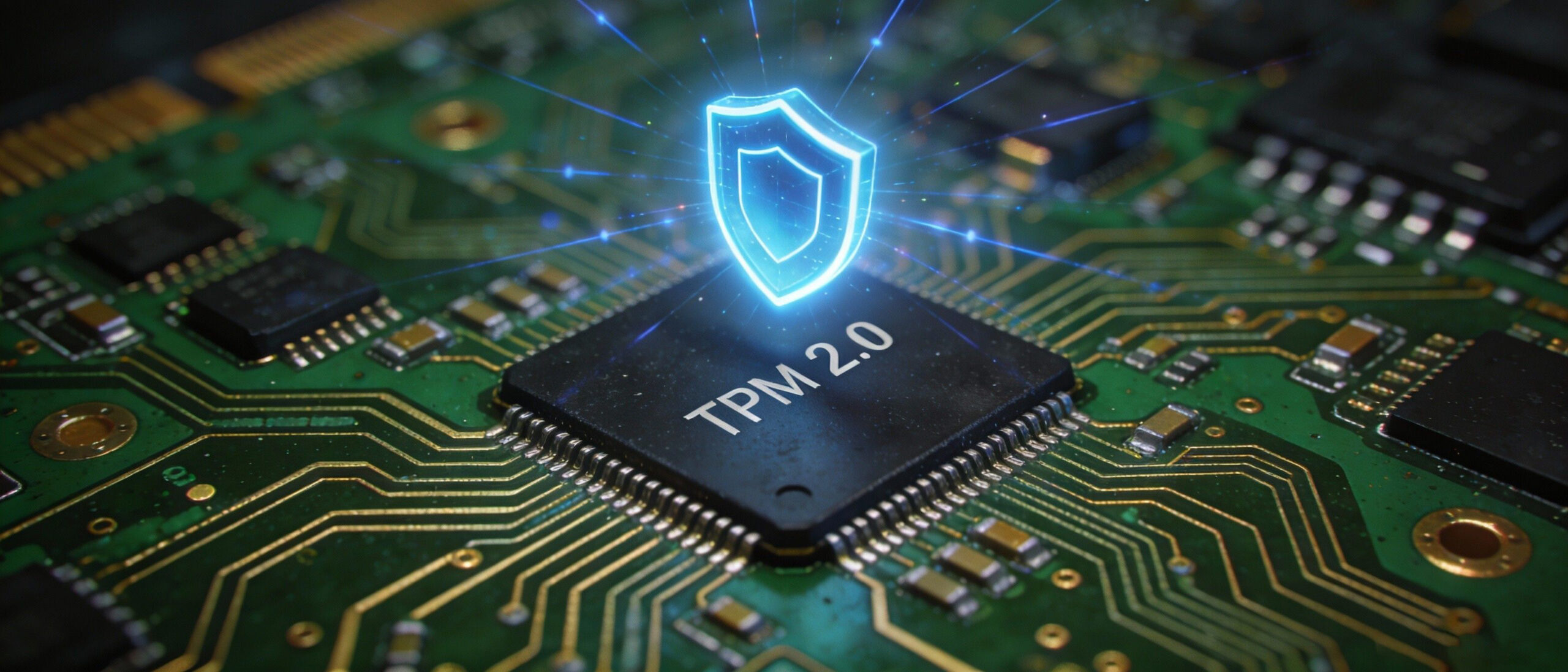
- Mandatory TPM 2.0 Integration: Unlike its predecessors, Windows 11 necessitates the presence of a Trusted Platform Module (TPM) 2.0. This serves as a hardware-based Root of Trust, safeguarding sensitive encryption keys and ensuring firmware integrity against physical tampering.
- Virtualization-Based Security (VBS) & HVCI: By leveraging hardware virtualization, VBS creates an isolated memory region. This ensures that even if the OS kernel is compromised, malicious code cannot execute within the protected memory space.
- Passwordless Authentication: Support for Windows Hello for Business enables operators to access Human-Machine Interfaces (HMIs) via secure biometrics, mitigating the risks associated with weak or shared credentials on the factory floor.
2. LTSC: The Ten-Year Commitment to Stability
In industrial environments, distinct from consumer markets, “change” is often synonymous with “risk.” Manufacturing equipment demands continuous uptime and consistent behavior over extended periods.
- Long-Term Servicing Channel (LTSC): The Windows 11 IoT Enterprise LTSC offering (expected 2024 version) provides a 10-year support lifecycle. During this decade, devices receive critical security patches but are exempt from feature updates, preventing unexpected OS changes from disrupting validated industrial applications.
- Alignment with Fixed BOM Hardware: LTSC perfectly complements the “Fixed Bill of Materials” strategy employed by industrial hardware vendors, ensuring that the software environment remains compatible with specific hardware drivers for a decade.
3. Native Optimization for Edge Computing and AI
The factory of the future is data-driven, with processing power shifting from the cloud to the edge. Windows 11 IoT Enterprise provides the requisite infrastructure for high-performance Edge AI.
- Intel Hybrid Architecture Scheduling: Windows 11 features an advanced scheduler optimized for Intel’s 12th Gen (and newer) hybrid architecture (P-cores and E-cores). It intelligently routes critical real-time control tasks to Performance cores while relegating background telemetry to Efficiency cores.
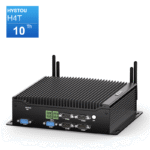
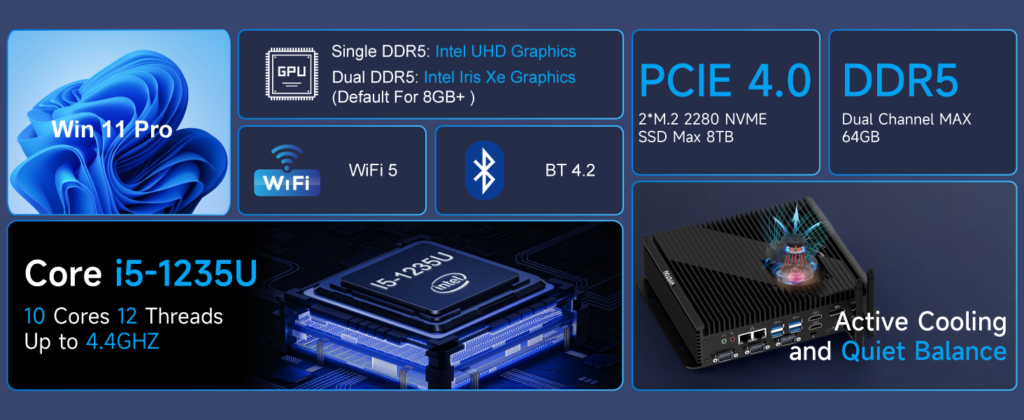
- Product in Action: To fully capitalize on this scheduling capability, the Hystou H4-12th Gen Industrial PC is engineered with the Intel Core i5-1235U processor. Its hybrid architecture works in tandem with Windows 11 to deliver a 40% efficiency boost in machine vision algorithms compared to legacy platforms, all while maintaining optimal thermal performance.
- Windows Subsystem for Linux (GUI): This feature significantly enhances developer productivity. Engineers can now run Linux GUI applications—such as ROS (Robot Operating System) simulations or AI inference models—directly alongside Windows applications, eliminating the overhead of dual-booting or resource-heavy virtual machines. This effectively bridges the gap between Windows and Linux on the factory floor.
4. Granular Control: Tailored for Fixed-Purpose Device
Unlike the general-purpose Windows 11 Pro, the IoT Enterprise edition empowers administrators with absolute control over the device environment, a critical requirement for kiosks, digital signage, and medical devices.
- Multi-App Kiosk Mode: IT managers can configure devices to launch specific industrial software upon boot. By suppressing the Start menu, taskbar, and system notifications, the OS prevents operator error and ensures the device remains dedicated to its specific function.
- Use Case: For dedicated terminals requiring maximum uptime, the Hystou H3-N100 Fanless Mini PC is the ideal candidate. When paired with Windows 11 Kiosk Mode and its efficient Intel N100 processor, it operates as a secure, locked-down “black box” solution, eliminating the risk of accidental operator interference in factory settings.
- OS Debloating: The platform allows for the removal of consumer-centric bloatware (e.g., Xbox services, Weather, News). This streamlined footprint reduces the attack surface and frees up system resources for mission-critical operations.

5. Enhanced Connectivity and Interoperability
As industrial communication protocols become more complex, the demand for bandwidth and low latency increases.
- Native Support for USB 4.0 and Wi-Fi 6E: Windows 11 IoT offers out-of-the-box support for the latest high-speed interfaces. This capability is vital for connecting high-resolution machine vision cameras and LiDAR systems, as well as facilitating massive wireless data transfer.
- Soft Real-Time Capabilities: While not a Hard Real-Time Operating System (RTOS), the IoT Enterprise edition features optimized thread prioritization. This delivers “Soft Real-Time” performance sufficient for a vast array of automation tasks, such as process monitoring and quality inspection.
Featured Hardware Ready for Windows 11 IoT
Legacy hardware often lacks the specifications required to support the advanced features of the new OS. To ensure a seamless transition to Industry 4.0, we recommend the following validated platforms from Hystou:
1. For High-Performance Edge Computing: Hystou H4-12th Gen Industrial PC
- Core Strength: Powered by the Intel Core i5-1235U (10 Cores/12 Threads), explicitly optimized for Windows 11’s hybrid scheduling.
- Industrial Spec: Features 6 COM ports, a fanless rugged design, and wide-temperature operation (-10°C to 55°C), making it the premier choice for complex SCADA systems and AI inference.
2.For Efficient Gateways & Kiosks: Hystou H3-N100 Fanless Mini PC
- For Efficient Gateways & Kiosks: Hystou H3-N100 Fanless Mini PC
Conclusion
Migrating to Windows 11 IoT Enterprise is not merely an aesthetic upgrade; it is a strategic investment in future-proof infrastructure. By addressing compliance through TPM 2.0, enabling AI convergence via WSL, and guaranteeing stability through the LTSC model, it stands as the definitive operating system for the next generation of industrial hardware.
Ready to Future-Proof Your Industrial Infrastructure?
Our engineering team is available to assess your current hardware compatibility and provide a tailored migration strategy using Hystou’s high-performance product line. Contact us today for a consultation.
Our engineering team is available to assess your current hardware compatibility and provide a tailored migration strategy using Hystou’s high-performance product line. Contact us today for a consultation.

HYSTOU
HYSTOU has established its R&D headquarters in Shenzhen, drawing on over a decade of experience. Our core team members, who previously served at renowned companies such as Inventec and Quanta Computer, form the backbone of our technical expertise. With robust R&D and innovation capabilities, we remain steadfast in our commitment to pursuing excellence in the field of technology products.