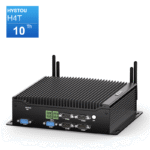
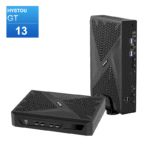
Single-Ethernet-port Mini PCs were once enough for basic internet needs. But as work and life become more digital, they can no longer keep up. Many users face frustrating problems: data leaks, unexpected network outages, slow file transfers, and constant cable plugging and unplugging.
This is where dual-Ethernet-port Mini PCs come in. They solve these pain points with practical functions and stable performance.
What is a Dual Ethernet Port Mini PC?
A dual Ethernet port Mini PC is a compact computing device with two independent wired network ports. Unlike single Ethernet port models, it can connect to two different networks at the same time.
It is small in size, energy-saving, and efficient. It is widely used in industrial, office, home, and other fields. The real value of this device lies in solving the practical pain points that single-port devices cannot solve.
Core Functions of Dual Ethernet Port Mini PC
The two Ethernet ports of the device are independent of each other and do not interfere with each other. Each function targets specific user pain points. We also add key hardware standards to help you choose the right model.
Network Isolation: Your Digital Security Barrier
If you use a single Ethernet port device, your internal network (such as industrial control systems, office servers, or monitoring data) must share the same network as the external internet. This exposes core data to cyber risks like hacking and data leaks.
One Ethernet port connects to the external network (router or optical modem) for normal internet access. The other connects to the internal network (switch, camera, industrial equipment, or office intranet).
This physical isolation ensures that internal data is not exposed to the external network. It forms a solid firewall for your data security. This architecture is ideal for running virtualization platforms like pfSense or Proxmox, enabling enterprise-level network control.
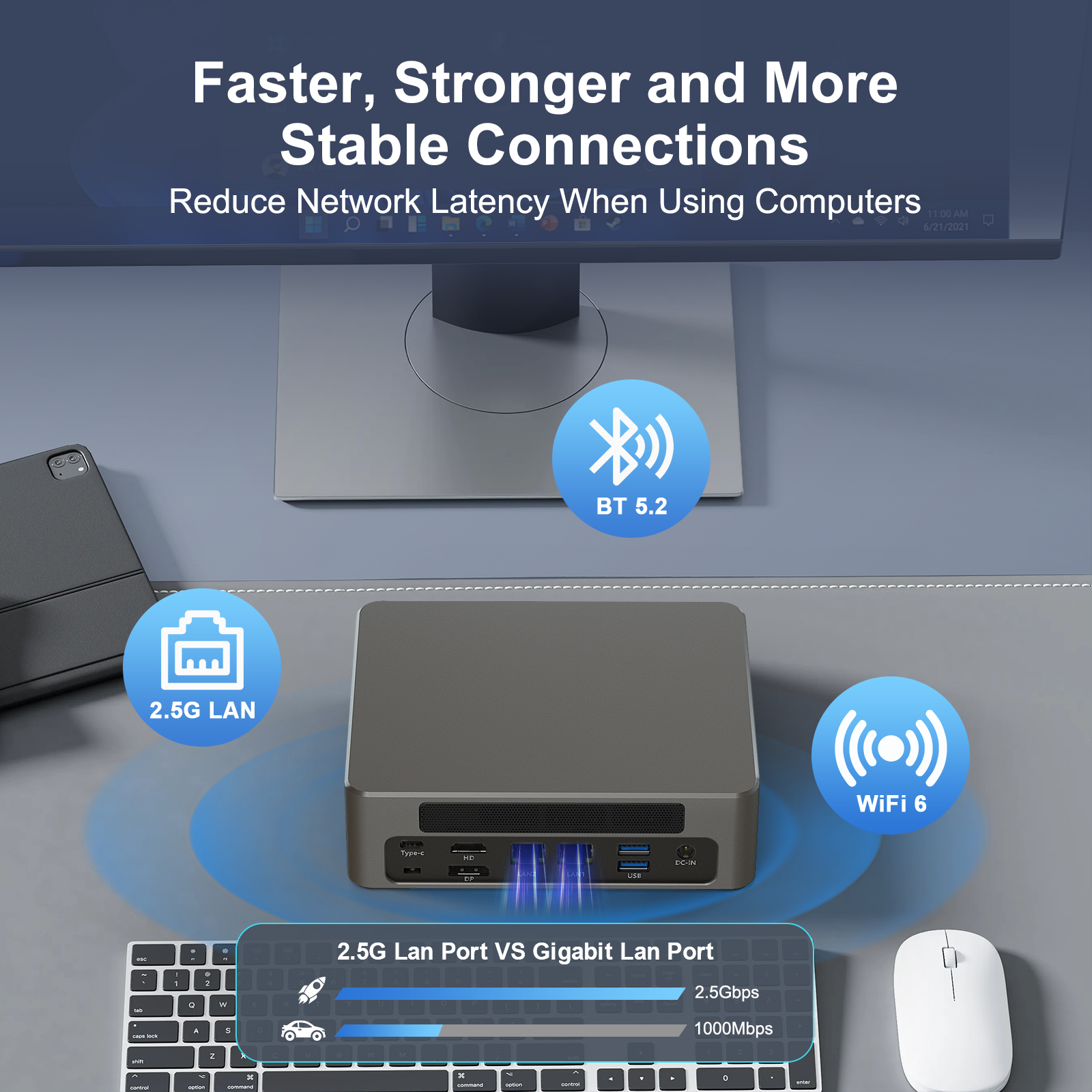
Hardware tip: For high stability, choose models equipped with Intel i225/i226 network cards (such as i226-V). These cards are favored by the industry for their low latency and compatibility with high-speed 2.5GbE networks.
Network Link Backup: Uninterrupted Network for Key Tasks
A single Ethernet port device will go offline immediately if the network cable is disconnected or the network fails. This is disastrous for key tasks like industrial production, live streaming, and store cash registers.
You can connect both Ethernet ports to the same router or network. If one network cable is disconnected or fails, the other will automatically take over.
It ensures that your device will not go offline. This function is very important for key businesses that cannot afford network interruption.
Bandwidth Aggregation: Faster Data Transmission
Single Ethernet port devices (usually 1Gbps) are slow when transferring large files (such as industrial images, video materials, or office backups). This wastes a lot of work time.
Through link aggregation settings, the bandwidth of the two Ethernet ports can be combined. For example, two 2.5GbE ports can be aggregated into 5Gbps bandwidth, and two Gigabit ports can be aggregated into 2Gbps bandwidth.
This greatly improves the speed of internal network data transmission. To achieve link aggregation, your router and switch must also support this function, and the protocols must be consistent.
Multi-Network Segment Access: Save Time and Effort
If you need to access two different local area networks (such as the office intranet and the test environment), a single Ethernet port device requires frequent cable plugging and unplugging. This is time-consuming and inefficient.
The two Ethernet ports can be connected to different network segments respectively. You don’t need to plug and unplug the network cable frequently. You can access two different local area networks at the same time.
It saves time and improves work efficiency, especially for IT maintenance and industrial debugging personnel.
Key Advantages of Dual Ethernet Port Mini PC
Compared with single Ethernet port Mini PCs and traditional desktop computers, dual Ethernet port devices have obvious advantages. They are practical and easy to use, and can bring real value to users.
High Security
Physical network isolation avoids mutual access between internal and external networks. It effectively prevents unauthorized access and data leakage. It is suitable for enterprises, industrial sites, and other scenarios with high security requirements.
High Stability
Link backup function ensures uninterrupted network connection. Even if one network fails, the device can work normally. It reduces the impact of network failure on work and business.
High Efficiency
Bandwidth aggregation improves data transmission speed. Multi-network segment access saves the trouble of switching networks. It makes work and study more efficient. It also reduces the cost of purchasing multiple devices.
Single vs Dual Ethernet Port Mini PC
Task/Scenario | Single Ethernet Port Mini PC | Dual Ethernet Port Mini PC |
|---|
Network Isolation | Not supported; high data leakage risk | Physical isolation; safe and reliable |
Bandwidth Aggregation | Not supported; slow transmission | Supported; up to 20Gbps (10GbE×2) |
Multi-Network Access | Need frequent cable plugging; inefficient | Dual access; no cable switching |
Link Backup | No backup; easy to go offline | Automatic switch; uninterrupted |
Industrial/Professional Use | Not suitable; cannot meet needs | Ideal, stable, and functional |
Core Application Scenarios
Dual Ethernet port Mini PCs are widely used. They can meet the needs of different scenarios.
Industrial Automation
Industrial production lines need to connect to internal equipment (PLC, frequency converter, sensor) for real-time control, and also connect to the cloud for data analysis. Single-port devices cannot separate these two networks, leading to unstable data transmission and potential risks.
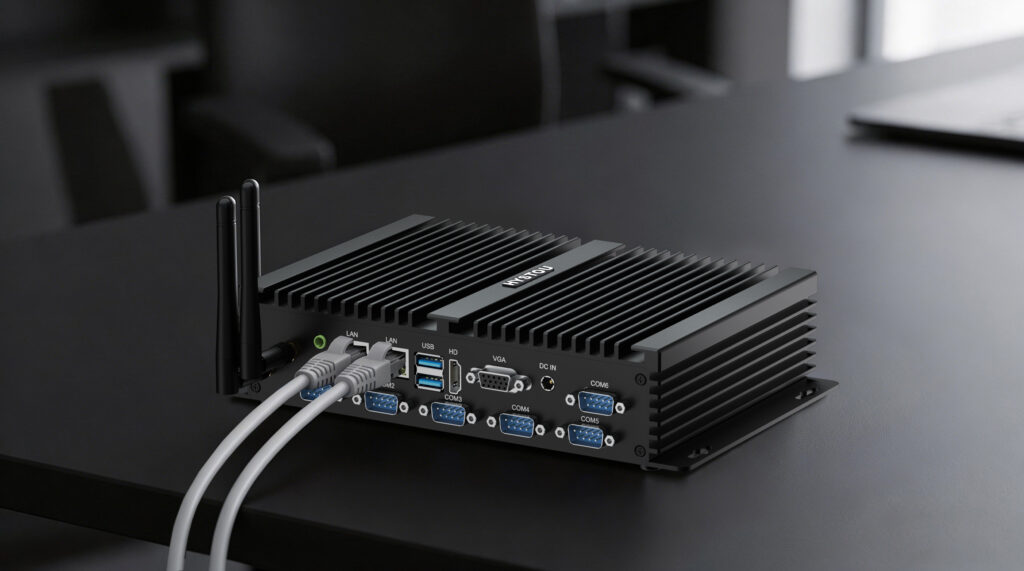
One Ethernet port connects to the PLC, frequency converter, sensor, and other industrial equipment. The other connects to the cloud or upper computer to upload data. It is used as an industrial gateway or edge computing device.
Soft Router / Bypass Gateway
Traditional routers have limited functions and poor flexibility. They cannot meet the needs of internet access control, ad blocking, and VPN services for enterprises and families.
One Ethernet port is used as a WAN port to connect to the optical modem for dial-up internet access. The other is used as a LAN port to connect to the local area network switch.
It can run open-source firewall and routing platforms like OPNsense or pfSense, realizing functions such as internet access control, ad blocking, network speed limiting, and VPN support. OPNsense, based on FreeBSD, has rich enterprise-level functions and high security, making it an ideal choice for dual LAN devices.
Security Monitoring
Single-port devices need to share network bandwidth with monitoring cameras and office equipment. This leads to slow monitoring video transmission and blurred remote viewing.
One Ethernet port connects to the external network for remote viewing of monitoring footage. The other directly connects to the monitoring camera switch. It does not occupy the bandwidth of the office or home network.
Enterprise Office / Store Cash Register
Single-port devices mix office internet and business networks (cash register, access control, attendance). This causes network congestion and increases the risk of business data leakage.
One Ethernet port is used for office internet access, such as browsing web pages and sending emails. The other connects to cash register systems, access control, attendance machines, and internal servers.
The architecture separates the office network from the business network. It eliminates network congestion and data security risks while ensuring uninterrupted business operations.
Private Cloud / File Server
Single-port devices cannot separate large file transmission from normal internet access. Copying large files will cause slow internet speed or even disconnection.
Two Ethernet ports are connected to the main router and secondary router,r respectively. Large file transmission in the internal network uses one port. Normal internet access uses the other port.
Such a setup guarantees file transfers will not disrupt regular internet usage. It also boosts overall file transmission speeds for smoother daily workflows. For example, aggregated dual 2.5G ports can deliver sustained transmission speeds of up to 2.5Gbps in real-world operation.
FAQ
Q1: Can I use a dual Ethernet port Mini PC as a hardware firewall?
Yes. It is one of the most common uses of dual LAN devices. By installing open-source systems like OPNsense or pfSense, you can realize enterprise-level firewall functions such as intrusion detection, traffic shaping, and stateful inspection. Choosing models with Intel i225/i226 network cards will make the firewall more stable and efficient.
Q2: Can dual Ethernet ports improve internet speed?
It depends on the usage scenario. Dual ports cannot improve the external internet speed provided by your ISP (e.g., 1Gbps). But they can improve internal network transmission speed through bandwidth aggregation. For example, two 2.5G ports can be aggregated into 5Gbps, making large file transmission faster.
Q3: What’s the difference between Intel i225/i226 and Realtek network cards?
Intel i225/i226 network cards (such as i226-V) are more stable and have lower latency. They support 2.5GbE speed and TSN time-sensitive networks, which are suitable for industrial, soft router, and other high-demand scenarios. Realtek network cards (such as RTL 8168) are cost-effective and suitable for basic scenarios with low requirements for stability.
Q4: Which HYSTOU dual Ethernet port Mini PC is suitable for me?
For industrial and professional scenarios (soft router, industrial gateway), choose HYSTOU industrial series with dual Intel 2.5G (i226-V) ports. For basic scenarios (home private cloud, office), the HYSTOU J4125 model with dual RTL 8168 Gigabit ports is a cost-effective choice.
Conclusion & Call to Action
Dual Ethernet port Mini PCs are no longer optional. They are practical and versatile devices that solve the pain points of single-port devices. Their core values are network isolation, link backup, bandwidth aggregation, and multi-network segment access.
Whether it is industrial control, enterprise office, security monitoring or home use, they can bring a more convenient, safe, and efficient experience. Choosing the right model (such as those with Intel i225/i226 network cards) can further improve stability and performance.
Want to learn more about the actual performance of HYSTOU dual 2.5G Ethernet port devices? Click to view our latest test data and complete model selection guide.
HYSTOU has established its R&D headquarters in Shenzhen, drawing on over a decade of experience. Our core team members, who previously served at renowned companies such as Inventec and Quanta Computer, form the backbone of our technical expertise. With robust R&D and innovation capabilities, we remain steadfast in our commitment to pursuing excellence in the field of technology products.