The Mini PC: Your Secret Weapon for a More Secure and Efficient Network
Introduction
Why Mini PCs Are Ideal for Secure Hardware?
Minimal Attack Surface
One of the key advantages of Mini PCs in network security is their minimal attack surface. Unlike regular desktop computers that are often loaded with a wide range of software—some of which may be unnecessary and outdated—Mini PCs are typically used for specific, targeted tasks such as acting as a firewall or a monitoring server. This means you only need to install the software essential for the task at hand. By reducing the number of applications and programs running on the device, you significantly decrease the number of potential vulnerabilities that hackers can exploit. For example, a Mini PC used solely as a firewall won’t have productivity software like office suites or media players, which are common sources of security loopholes.
Enhanced Physical Security
Physical security is often an afterthought in network protection, but it’s just as important as digital security. Mini PCs, with their small and compact design, offer enhanced physical security. They can be easily locked under a desk using a cable lock or hidden in hard – to – reach places like ceiling voids. This makes it extremely difficult for unauthorized individuals to steal the device or tamper with its hardware. In contrast, regular desktop PCs are larger and more conspicuous, making them easier targets for theft or physical manipulation. For instance, in a busy office environment, a Mini PC hidden in the ceiling is far less likely to be noticed and tampered with than a bulky desktop on a desk.
Energy Efficiency and Continuous Operation
Network security devices must run continuously to provide constant protection. Mini PCs are highly energy-efficient, consuming far less power than traditional desktop computers or servers. This low power consumption not only reduces your electricity bills but also allows the Mini PC to operate continuously without overheating or causing excessive wear and tear. For example, a typical Mini PC consumes 30-80 watts of power, compared to a desktop PC that can consume 100 – 200 watts. This energy efficiency makes Mini PCs a cost-effective choice for long-term, 24/7 network security operations.
Deployment Flexibility
In today’s dynamic business environment, network security devices must be deployed in multiple locations. Mini PCs offer exceptional deployment flexibility. Their small size and lightweight design mean they can be easily installed in any environment, whether it’s the headquarters office, a remote branch, a conference room, or a reception area. They don’t require a lot of space, and they can be integrated seamlessly into existing network setups. For example, in a small branch office with limited space, a Mini PC can be mounted on the back of a monitor or placed in a small cabinet, providing robust network security without taking up valuable desk space.
Key Security Applications of Mini PCs in Enterprise Networks
1. Dedicated Firewall/Router
●Challenge
Commercial routers available in the market often have limited functionality. They cannot run advanced intrusion detection systems (IDS) such as pfSense and OPNsense. These basic routers can only provide basic network connectivity and simple security features, which are insufficient to protect enterprise networks from modern, sophisticated cyber threats. For example, a standard commercial router may not be able to detect and block advanced malware or prevent unauthorized access to the network.
●Solution
By flashing an open-source firewall system like pfSense or OPNsense onto a Mini PC, you can create an enterprise-level, customizable high performance firewall. Open-source firewall systems offer a wide range of advanced features, including intrusion detection and prevention, virtual private network (VPN) support, traffic shaping, and content filtering. These features allow you to tailor the firewall to meet the specific security needs of your enterprise. For instance, you can set up custom rules to block certain types of traffic, create VPN connections for remote employees, and monitor network traffic in real-time.
●Product Association
Our HYSTOU N100 is the ideal platform for running pfSense. It is equipped with multiple high-speed network ports (including 2.5G Ethernet ports) that ensure fast and reliable network connectivity. The stable performance of [Product Model A] allows the pfSense system to run smoothly, even when handling large amounts of network traffic. Whether you’re a small business or a large enterprise, HYSTOU N100 can provide the performance and connectivity you need to build a robust, enterprise-level firewall.
2. Network Monitoring and Intrusion Detection System
●Challenge
Enterprise networks generate a massive amount of traffic every day. Monitoring this traffic in real-time to detect abnormal behavior is a significant challenge. Traditional monitoring systems can be expensive and resource-intensive, and they may not be able to keep up with the high volume of network traffic. This makes it difficult to identify potential security threats promptly, increasing the risk of data breaches and network attacks.
●Solution
Deploy a Mini PC installed with Security Onion or similar network monitoring software. Security Onion is a free, open-source network security monitoring platform that combines multiple tools for intrusion detection, log management, and network analysis. A Mini PC running Security Onion acts as a “black box” for your network, recording all network traffic, and an “alarm system” that alerts you to any abnormal behavior. For example, if there’s a sudden spike in traffic from an unknown IP address or an attempt to access a restricted server, the Mini PC will immediately send an alert, allowing you to take action quickly.
●Product Association
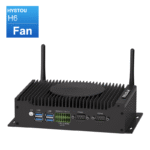
HYSTOU H6 is specifically designed for network monitoring and intrusion detection. It supports large-capacity memory (up to 64GB DDR4) and high-speed storage (such as NVMe SSDs), which enables it to efficiently process and analyze massive amounts of network data packets. Even during peak network hours, [Product Model B] can handle the load without compromising on performance. This ensures that you never miss a potential security threat, keeping your network safe and secure.
3. Secure Digital Signage and Information Terminals
●Challenge
Public area computers, such as digital signage and information terminals in lobbies, shopping malls, and airports, are highly vulnerable to malicious use. These devices are often accessed by a large number of people, including visitors with unknown intentions. Malicious users can install malware, change the content displayed, or even use the devices to gain access to the enterprise network. This not only poses a security risk but also damages the reputation of the business.
●Solution
Use a Mini PC in locked mode to power the display screens. Locked mode allows you to restrict the Mini PC to run only specific applications, preventing unauthorized software installation and use. You can configure the Mini PC to display only the intended content, such as promotional videos, wayfinding maps, or product information. This significantly reduces the risk of malicious use and ensures the security of the device and the network it’s connected to. For example, in a hotel lobby, a Mini PC in locked mode can be used to power a digital check-in terminal, allowing guests to check in without having access to other parts of the hotel’s network.
●Product Association
Our Mini PCs support advanced remote management technologies such as Intel vPro and AMD Memory Guard. Intel vPro allows you to remotely manage and control the Mini PC, even if it’s offline or not connected to the network. You can update the software, troubleshoot issues, and monitor the device’s performance from a central location. AMD Memory Guard, on the other hand, provides hardware-level memory encryption, protecting sensitive data stored in the device’s memory from unauthorized access. With these technologies, you can easily manage and maintain all your digital signage and information terminals, ensuring their security and reliability.
4. Internal Servers and Key Management
●Challenge
Storing passwords or encryption keys on the cloud or main computers is extremely risky. Cloud storage services are vulnerable to hacking attacks, and main computers are often connected to the internet, making them easy targets for cybercriminals. If these sensitive credentials fall into the wrong hands, it can lead to unauthorized access to the enterprise network, data breaches, and other serious security incidents.
●Solution
Use an offline or network-isolated Mini PC as an internal password manager (such as Vaultwarden) or a certificate authority (CA) server. By keeping the Mini PC offline or isolated from the main network, you eliminate the risk of it being hacked from the internet. Vaultwarden is an open-source password manager that allows you to securely store and manage all your passwords in one place. A CA server, on the other hand, issues digital certificates that are used to authenticate users, devices, and applications on the network. For example, you can use the Mini PC – based CA server to issue certificates to employees’ devices, ensuring that only authorized devices can access the network.
●Product Association
HYSTOU H3-N100 features a silent and compact design. It has no noisy fans, making it ideal for use in quiet environments such as offices or server rooms. The compact size allows it to be placed in small spaces, such as a locked cabinet or a server rack. Despite its small size, [Product Model C] offers reliable performance, ensuring that your internal password manager or CA server runs smoothly at all times. It’s the perfect device to guard your most critical digital assets.
5. Secure Development and Testing Environments
●Challenge
Testing unsafe code on office computers can pose a significant threat to the entire network. When developers test new code or applications on their workstations, there’s a risk that the code may contain bugs, malware, or other security vulnerabilities. If these vulnerabilities are exploited, it can lead to the infection of the office computer and the spread of malware to other devices on the network. This can cause widespread disruption to business operations and result in data loss.
●Solution
Provide development teams with dedicated Mini PCs to build isolated sandbox testing environments. A sandbox environment is a secure, isolated space where developers can test new code and applications without affecting the main network. By using a Mini PC for this purpose, you can ensure that any security vulnerabilities in the tested code are contained within the sandbox and don’t spread to other parts of the network. For example, developers can test a new e – e-commerce application on the Mini PC – based sandbox, checking for bugs and security issues before deploying it to the live environment.
●Product Association
The powerful HYSTOU RTX 3050 is more than capable of running multiple virtual machines (VMs). It is equipped with a high-performance processor (such as an Intel Core i5/i7) and a large amount of memory (up to 64GB DDR5), which allows it to handle the resource requirements of multiple VMs simultaneously. Each VM can be configured as a separate testing environment, enabling developers to test different versions of code or applications at the same time. HYSTOU RTX 3050 is the perfect tool for creating isolated testing environments, helping your development team deliver secure, high-quality software.
What to Look for When Choosing a Mini PC for Network Security Tasks?
1. Connectivity
When choosing a Mini PC for network security, connectivity is a crucial factor. For tasks such as acting as a firewall, the Mini PC should have at least 2 Gigabit/2.5G Ethernet ports. Multiple network ports allow for separate internal and external network connections, enabling the Mini PC to effectively filter and route network traffic. For example, one port can be connected to the internet (external network) and the other to the internal enterprise network. This separation helps prevent unauthorized access from the internet to the internal network. Additionally, having more network ports can be beneficial for more complex network setups, such as creating VLANs (Virtual Local Area Networks) for better network segmentation.
2. Performance
The performance of the Mini PC is another key consideration. It should have sufficient CPU processing power and memory to handle the demands of network data throughput. A powerful CPU (such as an Intel Core i5/i7 or AMD Ryzen 5/7) ensures that the Mini PC can quickly process network traffic, run security software, and perform other security-related tasks without lag. Adequate memory (at least 8GB, preferably 16GB or more) is essential for storing and processing large amounts of network data and running multiple security applications simultaneously. For example, when using the Mini PC as a network monitoring device, a high-performance CPU and large memory allow it to analyze network packets in real-time and generate detailed reports.
3. Reliability
Network security devices need to be reliable and available 24/7. A Mini PC with a good heat dissipation design is essential for ensuring continuous, stable operation. Overheating can cause the device to crash or malfunction, leading to gaps in network security. Look for Mini PCs that have efficient heat sinks, fanless designs (for silent operation and reduced moving parts), or multiple fans for effective heat dissipation. For example, a fanless Mini PC with a large heat sink can dissipate heat effectively even when running continuously, making it more reliable than a Mini PC with a poor heat dissipation system. Additionally, choosing a Mini PC from a reputable brand with a good track record of reliability can give you peace of mind.
4. Security Features
To enhance the security of your network, the Mini PC should come with built-in security features. One important feature is support for TPM 2.0 (Trusted Platform Module) chips. TPM 2.0 is a hardware-based security chip that provides secure storage for encryption keys, passwords, and other sensitive data. It helps prevent unauthorized access to the device and ensures the integrity of the system. For example, TPM 2.0 can be used to encrypt the hard drive of the Mini PC, making it impossible for unauthorized individuals to access the data even if the hard drive is removed from the device. Other security features to look for include secure boot, which ensures that only trusted software is loaded when the device starts up, and BIOS password protection, which prevents unauthorized changes to the device’s BIOS settings.
5. Manageability
Remote management is essential for efficiently maintaining and troubleshooting network security devices, especially if they are deployed in multiple locations. A Mini PC that supports out – of – band management technologies such as Intel AMT (Active Management Technology) is a great choice. Intel AMT allows you to remotely access and manage the Mini PC even if it’s not connected to the operating system or the network. You can power on/off the device, update the firmware, troubleshoot issues, and monitor the device’s status from a central location. This saves time and resources, as you don’t need to send a technician to each location to perform maintenance tasks. For example, if a Mini PC deployed in a remote branch office has a software issue, you can use Intel AMT to remotely access the device, diagnose the problem, and fix it without leaving your headquarters.
Conclusion and Call to Action
- Browse our product range to find the Mini PC that best suits your security needs. Whether you need a high-performance device for network monitoring or a compact device for a remote branch office, we have a product that meets your requirements.
- Contact our solution experts. Our team of experienced professionals can assess your network security needs and provide you with a customized network security hardware solution. They can help you choose the right Mini PC, configure the software, and ensure that the device integrates seamlessly into your existing network.
- Share your experience on social media. We’d love to hear how you’re using innovative hardware like Mini PCs to enhance your network security. Share your stories, tips, and best practices with our community and help other businesses improve their network security.

HYSTOU M9 Mini PC – Intel i5-1340P WiFi 6 Desktop Computer (8K Triple Display)
- Processor: Intel Core I5-1235U / I7-1255U / I5-1335U / I5-1340P / I7-1360P
- Graphics Card: Intel® UHD Graphics (with single-channel memory) or Intel® Iris® Xe Graphics (with dual-channel memory)
- Memory: 2×DDR5 262Pin SODIMM, maximum support 64GB
- Storage: 2×M.2 2280 NVMe SSD (NVME1 supports Gen3 X4/SATA protocol, NVME2 supports Gen4 X4 protocol, both up to 4TB) + 1×SATA3.0 interface (supports 2.5-inch HDD/SSD, up to 6TB)
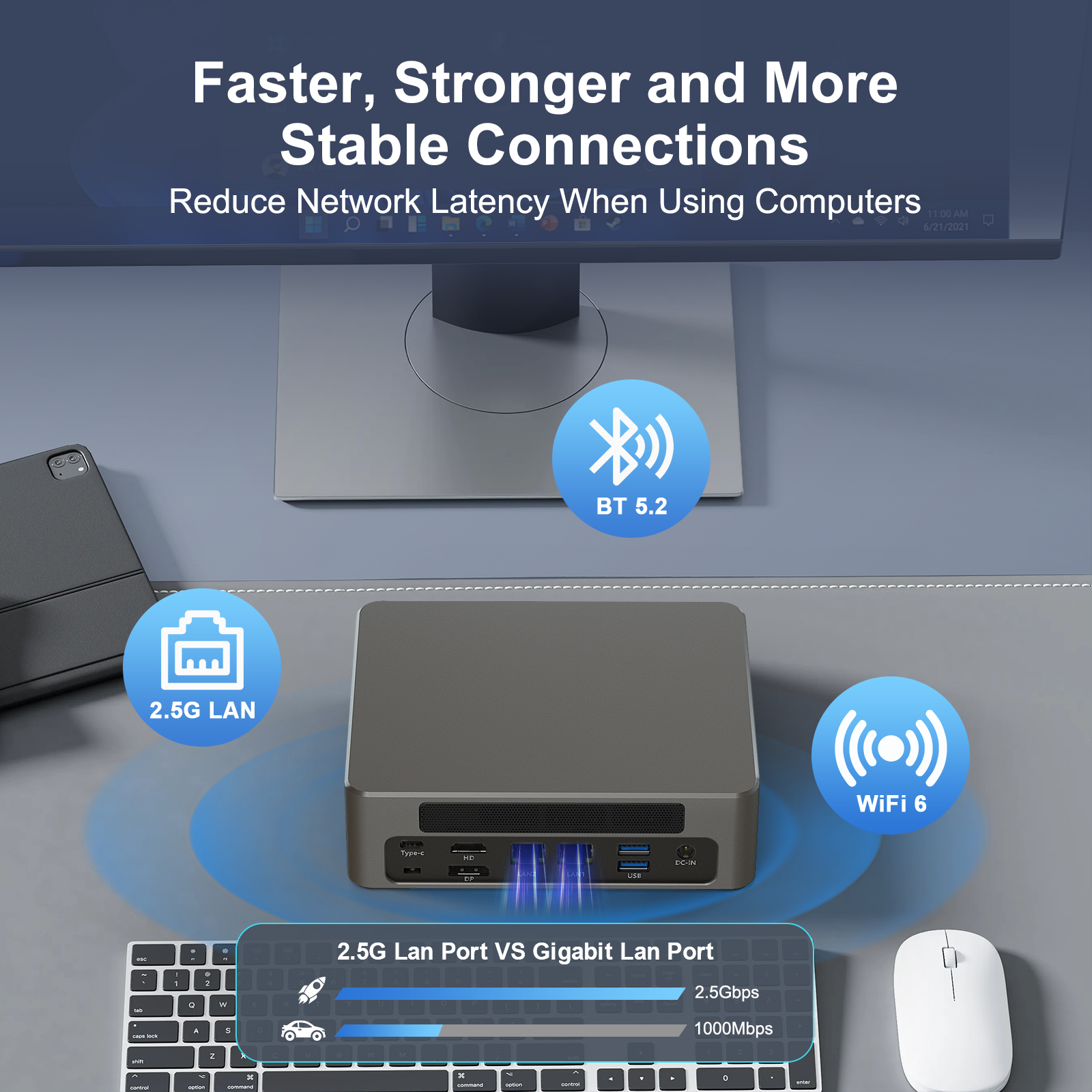
- Network: 2×RJ45 (Intel I225-V 2.5G network card), supports WiFi 6 (optional AX200) and Bluetooth 5.2

HYSTOU
HYSTOU has established its R&D headquarters in Shenzhen, drawing on over a decade of experience. Our core team members, who previously served at renowned companies such as Inventec and Quanta Computer, form the backbone of our technical expertise. With robust R&D and innovation capabilities, we remain steadfast in our commitment to pursuing excellence in the field of technology products.