pfSense Hardware Requirements 2026: Minimum vs. Recommended
Why pfSense Hardware Requirements Matter in 2026
pfSense is the world’s most trusted open-source firewall and router platform. It protects home networks, small offices, and large enterprises alike. But every new user asks the same question. What hardware does pfSense actually need?
The official answer is short. The practical answer is more complex.
Here is an uncomfortable truth. You may have paid for gigabit internet, yet only see a fraction of it. Up to 80% of your bandwidth can disappear inside the router’s CPU and network card. This is not a rumor. It is a common failure pattern. We see it all the time.
The symptoms are familiar. High latency and packet loss. Multi-WAN load balancing that collapses under load. VPN throughput that drops to a fraction of your line speed. All of these trace back to one root cause. Underpowered hardware.
Official pfSense Minimum Requirements vs. Real-World Needs
Netgate, the company behind pfSense, publishes the official minimum hardware requirements for hardware not sold by Netgate. Here is the list.
- 64-bit amd64 (x86-64) compatible CPU
- 1 GB or more RAM
- 8 GB or larger disk drive (SSD, HDD, etc.)
- One or more compatible network interface cards
- A bootable USB drive or optical drive for installation
Now read the fine print. The official documentation adds a warning. These minimums are not suitable for all environments. In other words, they describe the point where pfSense boots. They do not describe the point where pfSense performs.
Why the gap? Modern firewalls do far more than forward packets. Deep packet inspection (DPI). Intrusion detection and prevention (Suricata). DNS filtering (pfBlockerNG). VPN encryption. Continuous log writing. Every single feature consumes CPU, RAM, and disk I/O.
Table 1. Official minimums vs. real-world needs
Component | Official Minimum | Real-World Floor (Basic Internet) | High Throughput (IDS/IPS + VPN) |
CPU | Any amd64 CPU | Dual-core 2 GHz+, AES-NI | Quad-core 2.5 GHz+, AES-NI |
RAM | 1 GB | 4 GB | 8 GB or more |
Storage | 8 GB | 16 GB SSD | 32 GB+ SSD/NVMe |
NIC | 1 compatible port | 2x Intel GbE | 2+ x Intel 2.5 GbE |
Reality | Boots; lab testing | Browsing, streaming, basic routing | Full security stack |
pfSense CPU Requirements: Architecture, AES-NI, and Clock Speed
Three CPU factors determine pfSense performance. Architecture. Crypto support. Single-core speed.
Start with architecture. pfSense is amd64 only. 32-bit support is long gone. Non-Netgate ARM devices, including the Raspberry Pi, are not supported. Your CPU must be x86-64, plain and simple.
Next, AES-NI. This is a hardware instruction set for encryption. pfSense depends on it for VPN acceleration. Without AES-NI, OpenVPN and IPsec throughput drops significantly. With it, encryption overhead becomes almost invisible. For this reason, AES-NI is a must-have in any pfSense hardware guide.
Finally, single-core frequency. Some workloads are single-threaded by design. PPPoE dial-up is one example. Firewall rule evaluation is another. Per-packet processing runs in a single thread. A chip with high single-core speed handles these far better than a many-core chip with slow cores.
In short, the best hardware for pfSense is amd64 with AES-NI and strong single-core performance. Core count matters. But it is not the whole story.
pfSense NIC Requirements: Why Intel Is the Gold Standard
The network interface card is the heart of a firewall. Every packet passes through it. Yet many users treat it as an afterthought.
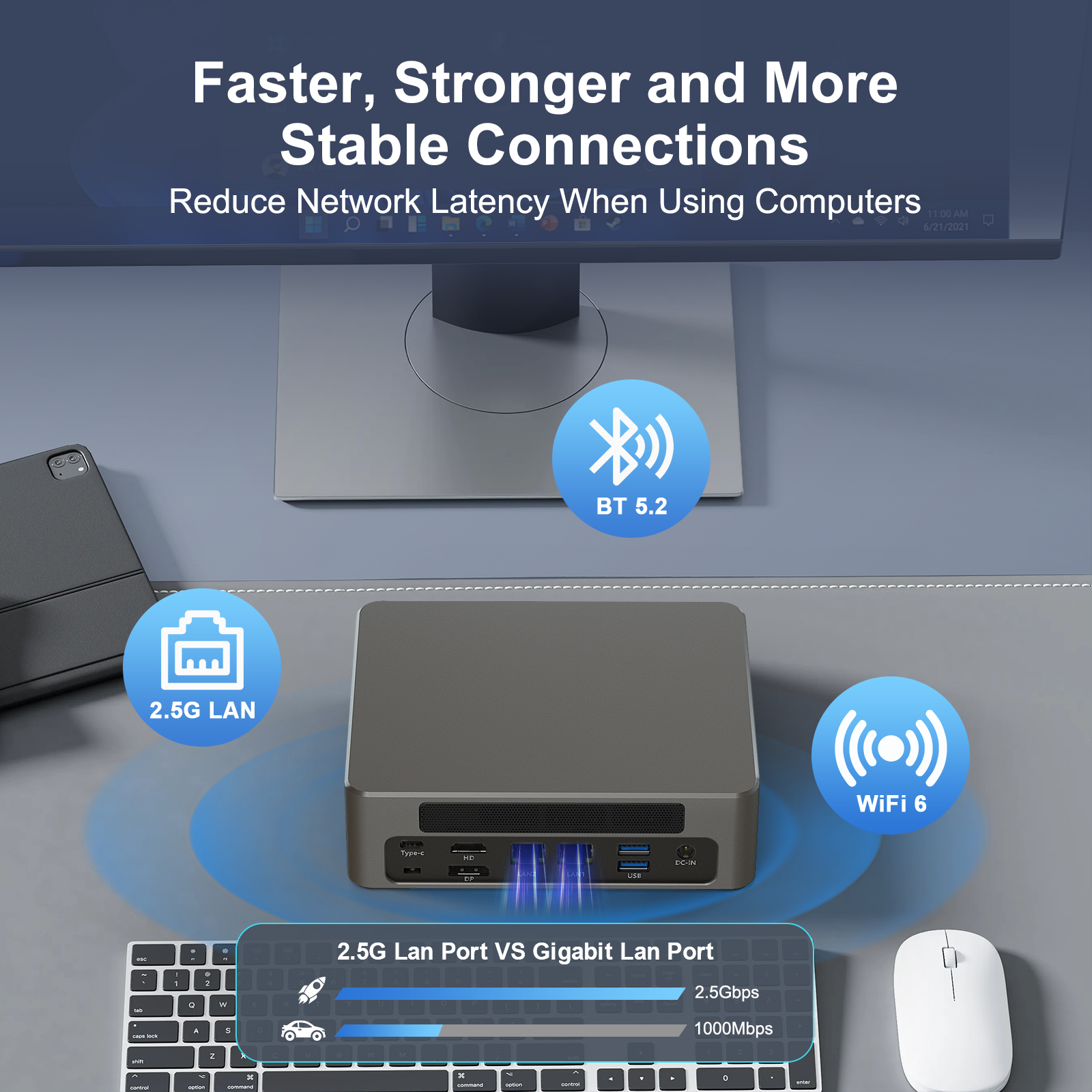
Intel NICs are the de facto standard for pfSense. Proven controllers include the Intel i211, i225-V, and i226-V for 1 GbE and 2.5 GbE. The Intel x520 family covers 10 GbE. These chips enjoy mature, stable drivers on FreeBSD, the operating system beneath pfSense.
Realtek is the common trap. Realtek controllers are cheap. They appear on countless consumer motherboards and low-cost devices. Under FreeBSD, however, Realtek drivers are known for stability problems. Packet loss. Unexpected CPU spikes. Links that drop under load. These issues are nasty because everything looks fine at first glance.
Port count matters as well. A dedicated WAN port and a dedicated LAN port provide clean physical separation. Extra ports enable DMZ, multi-WAN, and IoT segmentation. As a general rule, two ports are the floor. Four to six ports unlock real flexibility.
pfSense RAM Requirements: Why 4 GB Is the Real Floor
The official minimum says 1 GB. Real deployments should start at 4 GB. Here is why.
ZFS comes first. Modern pfSense installs commonly use the ZFS file system. ZFS maintains an adaptive cache that grows with available memory. More RAM means faster disk reads and smoother log handling.
Package services come second. pfBlockerNG loads large DNS blocklists into memory. Suricata loads complete IDS/IPS rule sets. Both are memory-hungry. On a 1 GB box, these services trigger swapping. Performance collapses.
Headroom comes third. Firewalls run 24/7. Rule sets grow. Packages get added. Memory usage only trends upward. In short, 4 GB is the floor for home and SOHO. 8 GB is the sweet spot when IDS/IPS is in the picture.
pfSense Storage and Other Hardware Considerations
pfSense writes logs continuously. Firewall logs, package logs, and cache updates hit the disk around the clock.
SSDs are the clear choice. They handle random writes better than HDDs and boot faster. For capacity, 16 GB is a practical starting point. Larger drives, 32 GB or more, leave room for logs and future packages.
Write endurance deserves attention. A firewall is an always-on device. Cheap consumer SSDs can wear out under constant logging. High-quality drives or industrial eMMC survive years of writes.
Cooling and power also matter. Fanless designs have no moving parts. That means no fan failure and no dust buildup. Power draw typically sits between 6 and 15 watts for a low-power appliance. That is less than most light bulbs.
Best pfSense Hardware by Scenario: A 5-Dimension Selection Table
Here is the core of this pfSense hardware guide. Use the table below to match your scenario. Read the column that fits your situation. Then add a margin of headroom.
Table 2. pfSense hardware by scenario
Dimension | Home | SOHO / Power Home | SMB | Enterprise |
Scenario | Router replacement | Small office, advanced home | Branch office, multi-site | Data center, HQ |
Network | Up to 1 Gbps WAN | 1-2.5 Gbps WAN | 2.5 Gbps, multi-WAN | 10 Gbps backbone |
Workload | Basic routing, firewall | WireGuard/OpenVPN, light IDS | Suricata IDS/IPS, failover | Heavy VPN, IPS, HA |
Config | Quad-core low power, 4-8 GB, 2x GbE | N100-class, 8 GB, 2x 2.5 GbE | High-clock quad or 6-core, 16 GB, 4x 2.5 GbE | 8+ cores, 16-32 GB, 10 GbE |
Typical hardware | J4125 mini PC | N100 fanless appliance | N100/N305 4-6 port appliance | 12th-14th Gen Core, embedded server |
5 Common pfSense Hardware Mistakes (And What to Do Instead)
Mistake 1. “A Raspberry Pi runs pfSense perfectly.” Reality check. FreeBSD’s ARM support is limited. Most ARM boards lack mature NIC drivers. pfSense does not support non-Netgate ARM hardware. Use an amd64 appliance instead.
Mistake 2. “Any NIC works. Realtek is good enough.” Reality check. Realtek chips often misbehave on FreeBSD. Expect packet loss and high CPU usage. Choose Intel NICs instead. The i211, i225-V, and i226-V are battle-tested on pfSense.
Mistake 3. “More cores are always better.” Reality check. Packet forwarding and PPPoE are single-threaded. Single-core frequency matters more than core count for most home and SMB traffic. A fast quad-core beats a slow eight-core.
Mistake 4. “One port plus a VLAN switch is enough.” Reality check. A single trunk link becomes a bottleneck. VLAN configuration also gets complex quickly. Physical multi-port NICs give clean WAN/LAN separation. They are easier to configure and debug.
Mistake 5. “The official 1 GB minimum is fine.” Reality check. It is fine for booting, not for running. pfBlockerNG, Suricata, and ZFS push real memory usage far higher. Start at 4 GB. Go to 8 GB for heavier loads.
Why a pfSense Fanless Mini PC Is the Practical Choice
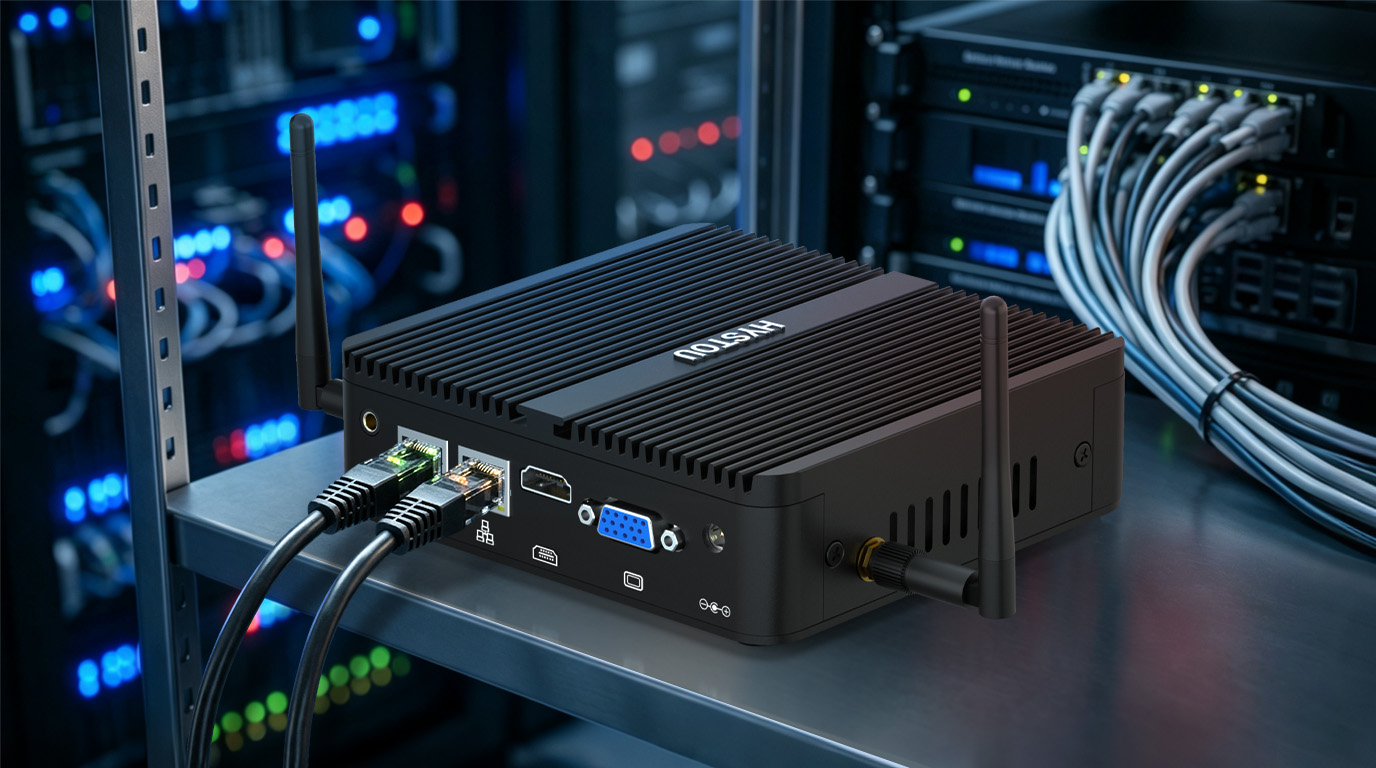
A dedicated appliance solves most hardware headaches at once. Three advantages stand out.
First, fanless passive cooling. Zero noise. Dust-resistant. True 24/7 operation with no moving parts to fail.
Second, native multi-port Intel networking. WAN, LAN, and optional DMZ ports come from the factory. No driver roulette. No PCIe adapters.
Third, ultra-low power draw. A typical fanless appliance uses 6-15 watts. That keeps heat, noise, and electricity bills low.
Consider the Intel Alder Lake-N N100. This chip is widely seen as the current sweet spot for pfSense. It offers 4 cores and 4 threads inside a 6 W TDP. It includes AES-NI. Many appliances pair it with onboard Intel 2.5 GbE controllers, such as the i226-V.
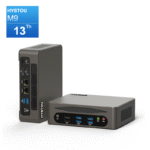
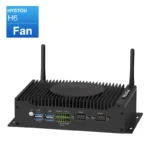
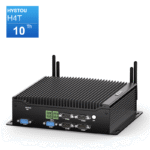
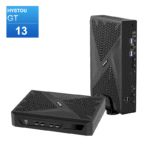
For most home and SOHO users, an N100 pfSense fanless mini PC handles 1-2.5 Gbps routing with firewall rules comfortably. It leaves headroom for VPN and light IDS/IPS. That is why HYSTOU builds pfSense-ready firewall mini PCs around the N100 platform, with 4 to 6 Intel 2.5 GbE ports and passive cooling.
Conclusion: A Simple 3-Step Formula for pfSense Hardware Selection
Here is the takeaway. Do not copy a spec sheet. Use a formula instead.
Step 1. Define your bandwidth. Start with your WAN speed and your realistic throughput target.
Step 2. Define your workload. Add VPN, IDS/IPS, multi-WAN, or heavy logging to the picture.
Step 3. Match a configuration. Use the scenario table above. Then add headroom for future growth.
Follow this order, and you will avoid both overspending and underpowering. Your firewall will run fast, stable, and quiet for years.

Author: Nick FU
Marketing Specialist | HYSTOU Mini PC & Network Appliance Manufacturer
HYSTOU has established its R&D headquarters in Shenzhen, drawing on over a decade of experience. Our core team members, who previously served at renowned companies such as Inventec and Quanta Computer, form the backbone of our technical expertise. With robust R&D and innovation capabilities, we remain steadfast in our commitment to pursuing excellence in the field of technology products.