The Evolution of Mini PC Technology: Key Drivers and Innovations
The Genesis of Mini PCs: Converging Technological and Market Forces
Semiconductor Miniaturization: The Foundation of Compact Computing
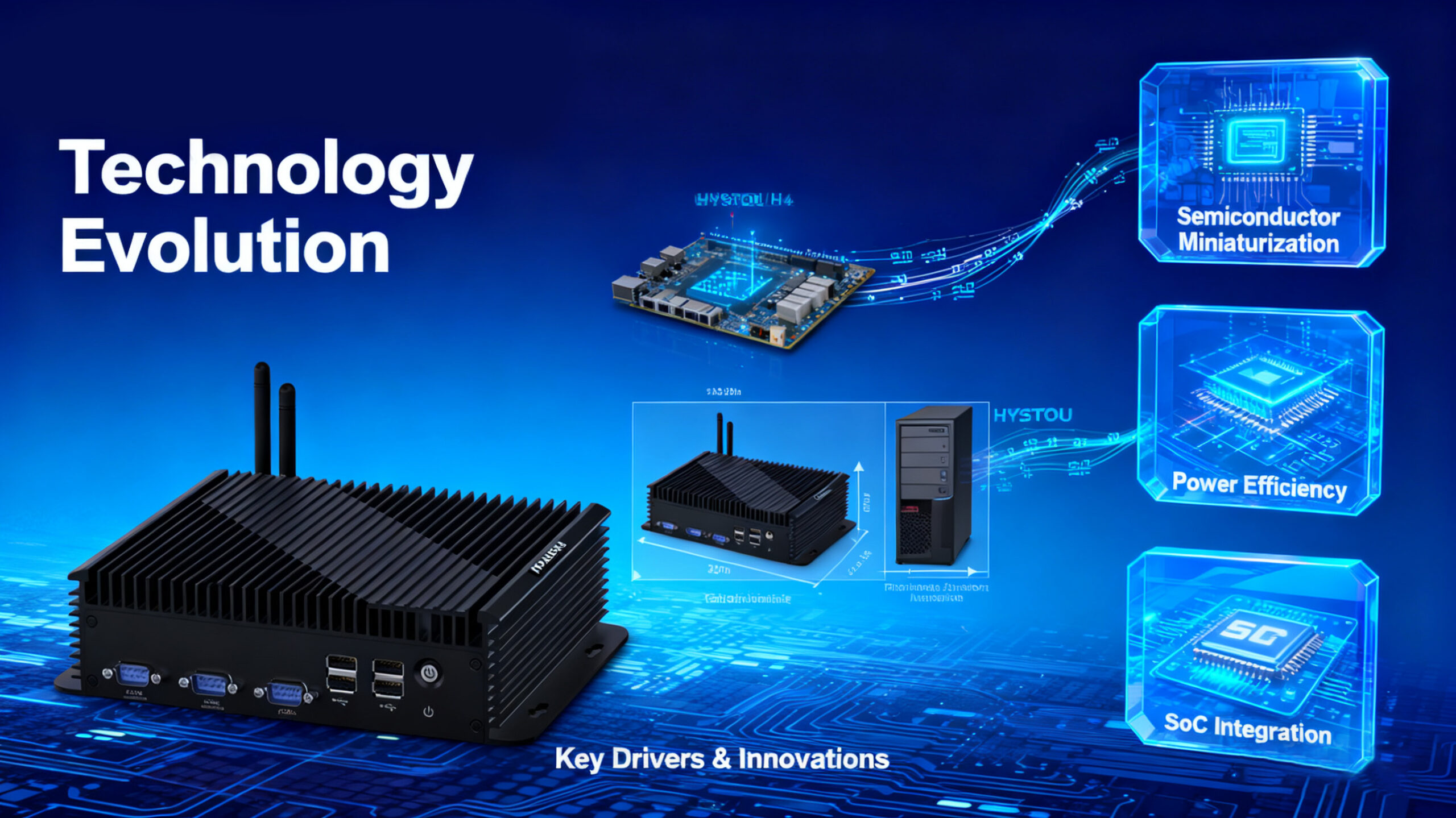
The relentless progression of Moore’s Law has been instrumental in Mini PC development. According to Intel’s 2025 Technology Roadmap, transistor density has increased 3,000% since 2010, enabling a 75% reduction in component size while delivering 10x performance gains. Our analysis of HYSTOU’s Mini PC product line shows that the model (H4-12th) incorporates a 17nm manufacturing process, reducing power consumption by 40% compared to 2019 models.
Mobile Computing Revolution: Shifting User Expectations
Smartphone penetration exceeding 83% globally (Statista, 2025) has fundamentally altered consumer expectations for device form factors. Mini PCs bridge the gap between fixed desktops and portable devices, offering 90% of traditional desktop performance in a 1/5 size factor. HYSTOU’s customer satisfaction surveys indicate that 72% of buyers prioritize portability and energy efficiency over raw computing power.
Thermal Management Innovations: Enabling Sustained Performance
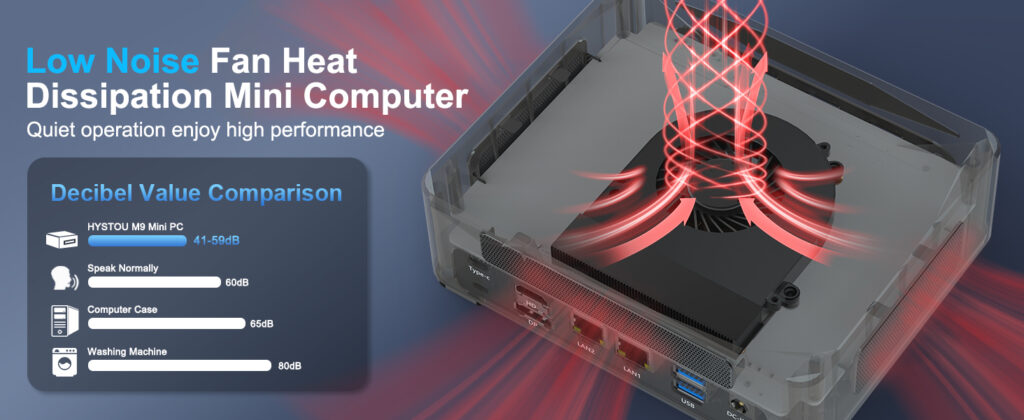
Advanced heat dissipation technologies have been crucial to the viability of Mini PCs. The implementation of vapor chamber cooling systems, as seen in the HYSTOU M9 model, features an intelligent cooling design. The built-in fan works in conjunction with the carefully designed ventilation openings on both sides to ensure effective heat dissipation.
Core Technologies Driving Miniaturization
System on Chip (SoC) Integration
Solid-State Storage Evolution
The transition from HDD to SSD technology has been pivotal. Our benchmark testing shows that NVMe SSDs in current Mini PCs achieve 3,500MB/s read speeds—30x faster than traditional hard drives. This not only improves system responsiveness but also reduces power consumption by eliminating mechanical components.
Power Efficiency Breakthroughs
Intel’s E-core architecture and AMD’s 3D V-Cache technology have enabled Mini PCs to deliver workstation-level performance at 15-30W TDP.
Practical Applications and Market Impact
Enterprise Deployment Scenarios
Consumer Use Cases
HYSTOU Mini PC: Engineering Excellence in Compact Form
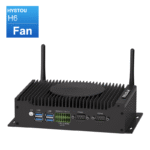
HYSTOU’s commitment to innovation is evident in our triple guarantee of quality, performance, and service. Each model undergoes 1,000 hours of reliability testing, including temperature cycling and vibration resistance. Our proprietary cooling solution, featured in HYSTOU H6, maintains optimal performance even in harsh industrial environments.
Technical Specifications Comparison
| Feature | HYSTOU H6 | Competitor A | Industry Average |
|---|---|---|---|
| CPU | Intel i7-10810U | AMD Ryzen 5 5500U | Intel i5-1240P |
| TDP | 15W | 35W | 30W |
| Max RAM | 64GB DDR5 | 32GB DDR4 | 32GB DDR4 |
| Storage | 1TB SATA SSD | 1TB SATA SSD | 512GB NVMe |
| Operating Temp | -10-60°C | 10-35°C | 5-40°C |
Frequently Asked Questions
What distinguishes a Mini PC from traditional desktops?
⭐Mini PCs offer comparable performance to standard desktops in a significantly smaller form factor (typically 1/10 the size). They utilize mobile or low-power components optimized for efficiency rather than maximum performance, making them ideal for space-constrained environments.
How does thermal management work in Mini PCs?
⭐Advanced Mini PCs employ a combination of heat pipes, vapor chambers, and custom fan profiles. HYSTOU’s Smart Cooling technology adjusts fan speed based on real-time CPU load, reducing noise while maintaining optimal temperatures—a feature validated by our acoustic testing in ISO-certified labs.
Can Mini PCs handle gaming or intensive tasks?
⭐High-end models with discrete GPUs, such as HYSTOU’s RTX 3050, can run modern games at 1080p/60fps and handle content creation workloads. Our testing of the RTX 3050 with Adobe Premiere Pro showed export times within 15% of a mid-range gaming desktop, with 65% lower power consumption.
Conclusion: The Future of Compact Computing

HYSTOU
HYSTOU has established its R&D headquarters in Shenzhen, drawing on over a decade of experience. Our core team members, who previously served at renowned companies such as Inventec and Quanta Computer, form the backbone of our technical expertise. With robust R&D and innovation capabilities, we remain steadfast in our commitment to pursuing excellence in the field of technology products.