Intel Celeron vs. Intel Core: Which Mini PC Processor is Right for You?
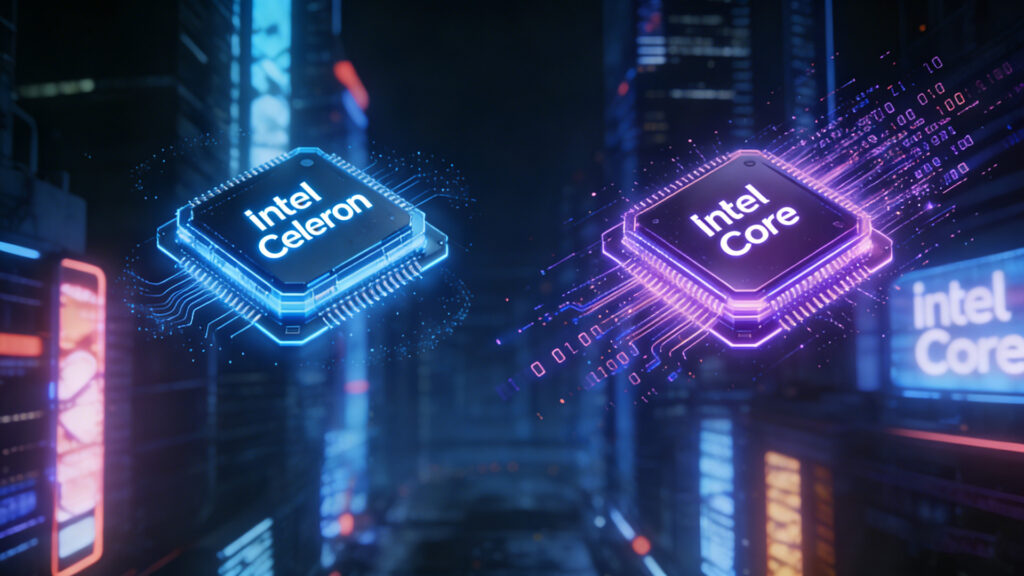
The Basics: Defining the Contenders
Intel Celeron: Basic Performance for Light Tasks
Intel Core: Powerful Performance for Demanding Tasks
Key Differences: A Deep Dive for Mini PC Buyers
Now that we have a basic understanding of what Celeron and Core processors are, let’s take a closer look at the key differences between them. This will help you make a more informed decision when choosing a Mini PC processor.
1. Performance Under Load
Think of the Celeron as a city car and the Core series as a highway cruiser.
Celeron: Perfect for single tasks. If you are opening a web browser, checking email, or editing a text document, it feels snappy. However, if you open 20 Chrome tabs and try to watch a 4K video simultaneously, a Celeron Mini PC will start to stutter.
Core (i3/i5/i7): Designed for multitasking. An Intel Core i5 Mini PC can handle Photoshop, background downloads, and video streaming all at once without breaking a sweat.
2. Heat and Power Consumption (TDP)
This is crucial for Mini PCs.
Celeron: These chips run very cool. Many Celeron Mini PCs are fanless (silent) because the CPU generates very little heat. If silence is your priority, Celeron is often the winner.
Core: While efficient, powerful Core chips (especially i7 or i9) generate more heat. These Mini PCs usually require active cooling fans. You might hear a quiet “whir” when the system is working hard.
3. Graphics Capabilities
Celeron: Good for static displays, digital signage, or basic 1080p/4K video playback. Not suitable for modern gaming.
Core: Integrated Intel UHD or Iris Xe graphics on Core chips are significantly stronger. You can play light games (like League of Legends or CS:GO) and edit videos much smoother on a Core i5 or i7.
Comparison Table: At a Glance
| Feature | Intel Celeron Mini PC | Intel Core Mini PC (i3/i5) |
| Price | Affordable | Moderate to High |
| Multitasking | Basic (1-3 apps) | Excellent (Heavy usage) |
| Gaming | Solitaire/Retro only | Light eSports / Casual |
| Noise Level | Often Silent/Fanless | Usually has a quiet fan |
| Best For | Kiosks, Basic Office, Streaming | Creative Work, Home Server, Gaming |
Which One Should You Buy?
Don’t overspend on power you don’t need, but don’t underspend and frustrate yourself with a slow computer. Here is our honest recommendation based on customer feedback:
Choose an Intel Celeron Mini PC if:
- You are budget-conscious: You need a computer for under 200-300.
- Basic usage: You only use the PC for Microsoft Word, Excel, and web browsing.
- Media Center: You want a small box attached to your TV purely for Netflix or YouTube.
- Digital Signage: You are running a display in a shop or restaurant.
- Industrial use: You need a fanless PC that won’t suck in dust.
Choose an Intel Core Mini PC if:
You are a power user: You hate waiting for apps to open.
Content Creation: You do photo editing, light video editing, or coding.
Multitasking: You have dual monitors and keep many apps open.
Home Server/Lab: You plan to run Plex servers, Virtual Machines (VMs), or Docker containers.
Longevity: You want a PC that will still feel fast 3-4 years from now.
Conclusion

HYSTOU
HYSTOU has established its R&D headquarters in Shenzhen, drawing on over a decade of experience. Our core team members, who previously served at renowned companies such as Inventec and Quanta Computer, form the backbone of our technical expertise. With robust R&D and innovation capabilities, we remain steadfast in our commitment to pursuing excellence in the field of technology products.