Industrial Mini PC Applications: The Ultimate Guide for Procurement in 2026
Introduction
The industrial computing landscape has undergone a radical transformation. Traditional bulky industrial PCs are being replaced by compact, powerful industrial mini PCs that deliver equivalent performance with a fraction of the footprint. For procurement managers overseeing factory automation, smart manufacturing initiatives, or industrial IoT deployments in Europe and North America, understanding the mini pc applications landscape is critical for making informed bulk purchasing decisions.
Whether you need a fanless industrial pc for dust-heavy environments, a rugged mini pc for outdoor installations, or an edge computing mini pc for real-time data processing, selecting the right solution requires deep technical knowledge. This guide analyzes industrial mini pc applications across six key sectors, providing B2B buyers with technical specifications, selection criteria, and vendor evaluation frameworks for 2026 procurement.
According to recent market analysis from Research and Markets, the global industrial PC market is projected to reach $8.7 billion by 2028, with miniaturized solutions accounting for an increasing share. As industrial 4.0 mini PC adoption accelerates, procurement teams must evaluate factors such as wide-temperature operation, DIN rail mounting options, industrial interface integration, and 24/7 continuous operation capabilities.
Industrial Mini PC vs Consumer PCs: Key Technical Differences
Unlike consumer-grade mini computers designed for office or home use, industrial Mini PCs are engineered for harsh environments and continuous operation. Key distinguishing features include:
- Wide Temperature Range: Operating from -20°C to 70°C (some models extend to -40°C to 85°C)
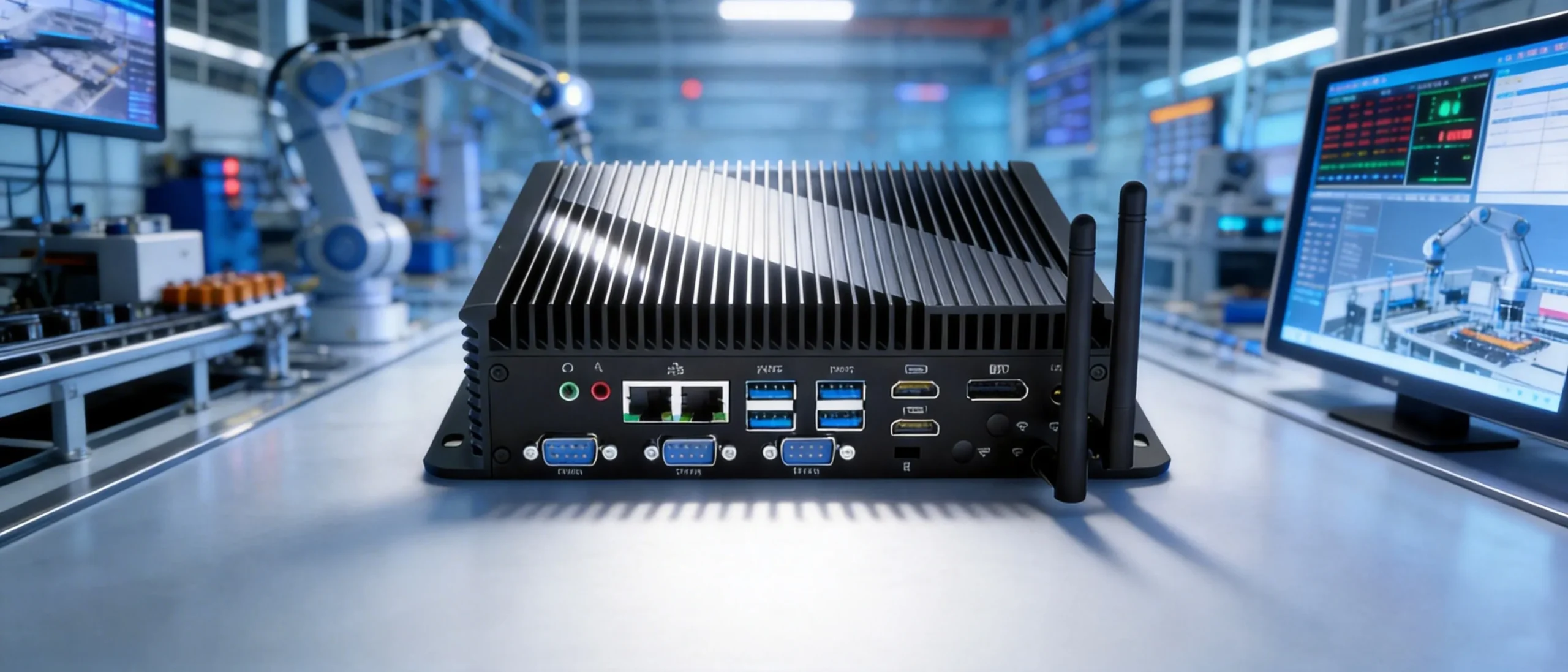
- Fanless Cooling Design: Eliminates moving parts, reduces maintenance, and prevents dust ingress
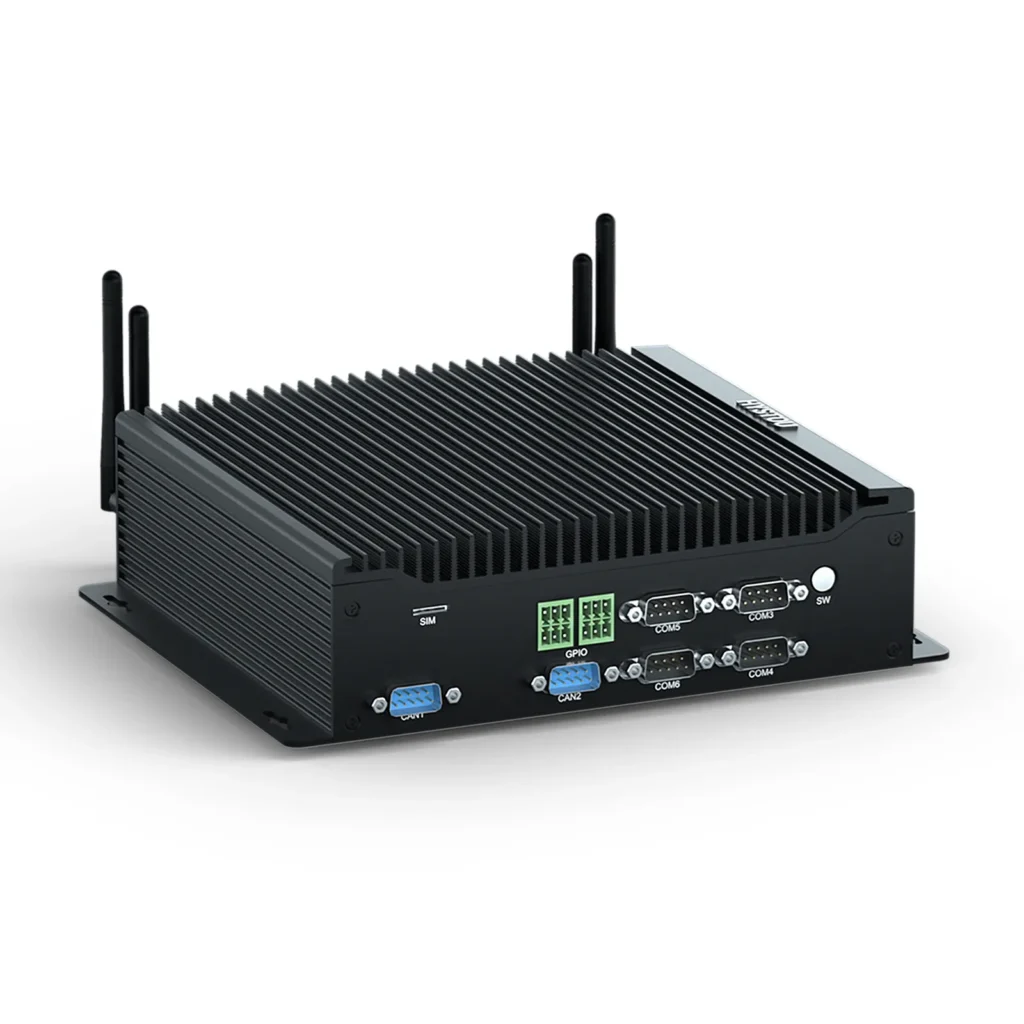
- Industrial Interface Integration: Multiple COM ports, GPIO, digital I/O, and CAN bus support
- Vibration and Shock Resistance: Meets IEC 60068 or MIL-STD-810G standards
- 24/7 Continuous Operation: Designed for uptime rates exceeding 99.9%
- Industrial Power Input: Supports 9-36V DC wide voltage input with protection against surges and spikes
These specifications make industrial Mini PCs suitable for deployment in manufacturing floors, outdoor kiosks, transportation systems, and other challenging environments where standard computing hardware would fail.
Top 6 Industrial Mini PC Applications for B2B Procurement
1. Factory Automation PC: Mini PC for PLC, HMI, and SCADA Systems
Application Overview: Industrial Mini PCs serve as the computing backbone for Programmable Logic Controllers (PLCs), Human Machine Interfaces (HMIs), and Supervisory Control and Data Acquisition (SCADA) systems.
Key Requirements:
- Multiple serial ports (RS232/485) for legacy equipment connectivity
- Rugged construction to withstand factory floor conditions
- Real-time processing capabilities for control loops
PLC Control Systems Mini PC Requirements
When selecting a mini PC for PLC control, prioritize compatibility with legacy equipment. Look for models with multiple RS232/485 serial ports (4-6 ports recommended) to connect with existing industrial machinery without requiring expensive converters. Key specifications include:
- Real-time processing: Intel Celeron J4125 or i3-1115G4 minimum
- Industrial COM ports: Isolated RS232/485 with ESD protection
- DIN rail mounting: VESA 75x100mm or DIN rail compatible enclosure
- Wide temperature operation: -20°C to 70°C standard operation
HMI Interface Mini PC Deployments
For human machine interface (HMI) mini pc applications, display output capabilities become critical. Recommended configurations for HMI deployments include:
- Triple display support: HDMI + DP + VGA for multiple monitoring
- Touch screen compatibility via USB or GPIO interfaces
- Low electromagnetic interference (EMI) for signal integrity
- Fanless cooling to prevent dust accumulation in control panels
SCADA Edge Computing Nodes
SCADA mini pc deployments serve as data aggregation points for industrial supervisory systems. These edge computing nodes require:
- Dual LAN ports for network redundancy and isolated networks
- Industrial-grade NVMe SSD for high-speed data logging
- Wide input voltage (9-36V DC) for backup power compatibility
- Remote management capabilities (Intel AMT or IPMI) for maintenance
Deployment Examples:
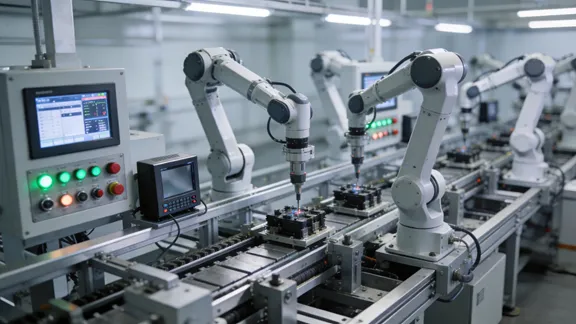
- Assembly line monitoring and control stations
- Quality inspection systems with machine vision integration
- Robotic cell controllers
2. Smart Manufacturing: Edge Computing Mini PC for Industry 4.0
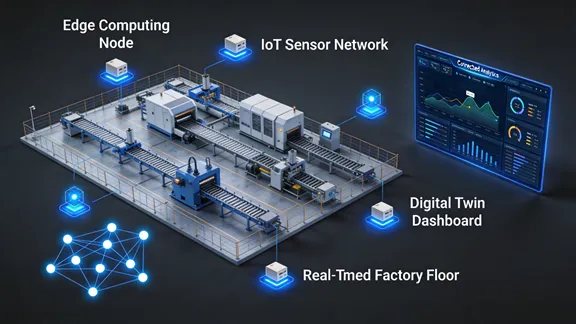
Application Overview: As manufacturers transition to Industry 4.0 paradigms, Mini PCs function as edge computing nodes that process sensor data locally before transmitting to cloud systems.
Key Requirements:
- High-performance multi-core processors for data processing
- Multiple high-speed USB 3.0/3.1 ports for camera and sensor connections
- Gigabit or 10GbE networking capabilities
Deployment Examples:
- Predictive maintenance analytics stations
- Real-time production monitoring dashboards
- Digital twin edge processing units
3. Transportation: Rugged Mini PC for Vehicles, Trains, and Maritime
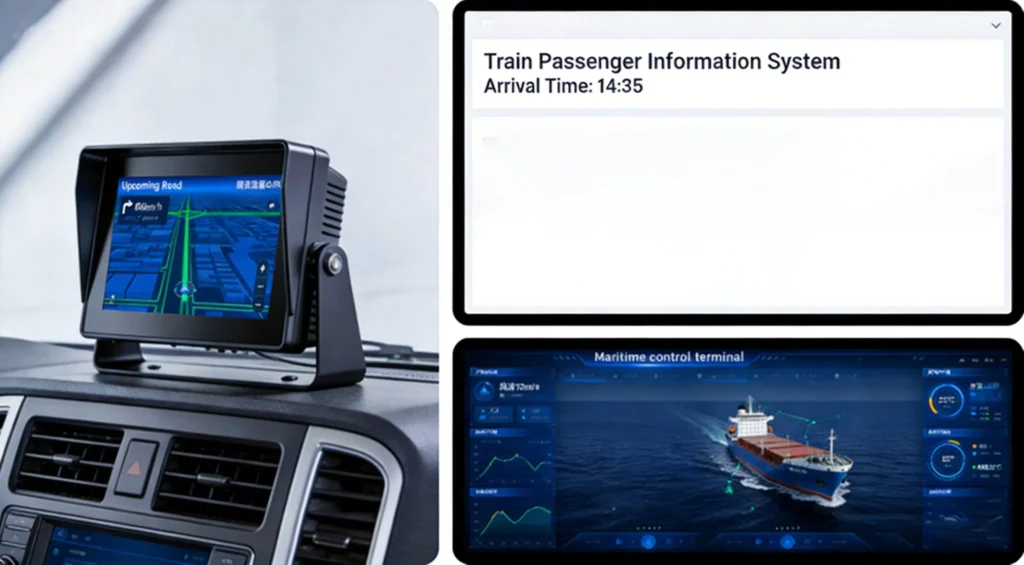
Application Overview: Vehicles, trains, and maritime vessels require compact computing solutions that can operate in mobile environments with constant vibration and temperature fluctuations.
Key Requirements:
- Wide temperature tolerance (-40°C to 85°C)
- Vibration resistance up to 5Grms
- DC power input (9-36V or wider range)
- GPS/GNSS integration capability
Deployment Examples:
- In-vehicle infotainment and monitoring systems
- Train passenger information display systems
- Maritime navigation and communication terminals
4. Digital Signage: Fanless Mini PC for Kiosks and Display Networks
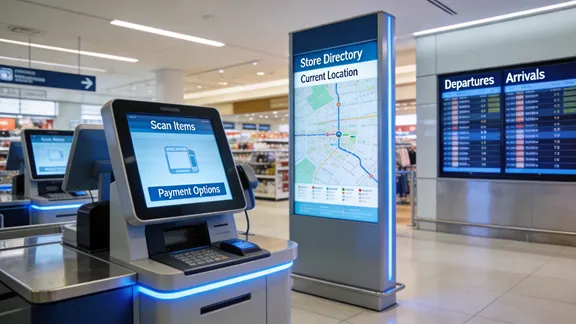
Application Overview: Retail stores, airports, and public spaces deploy Mini PCs to power interactive kiosks and digital signage networks.
Key Requirements:
- Compact form factor for enclosure integration
- HDMI/DP video outputs with 4K support
- Wi-Fi and cellular connectivity options
- Remote management capabilities
Deployment Examples:
- Self-checkout terminals
- Wayfinding kiosks in malls and airports
- Menu boards and promotional displays
5. Medical Grade Mini PC: Healthcare Equipment and Diagnostic Systems
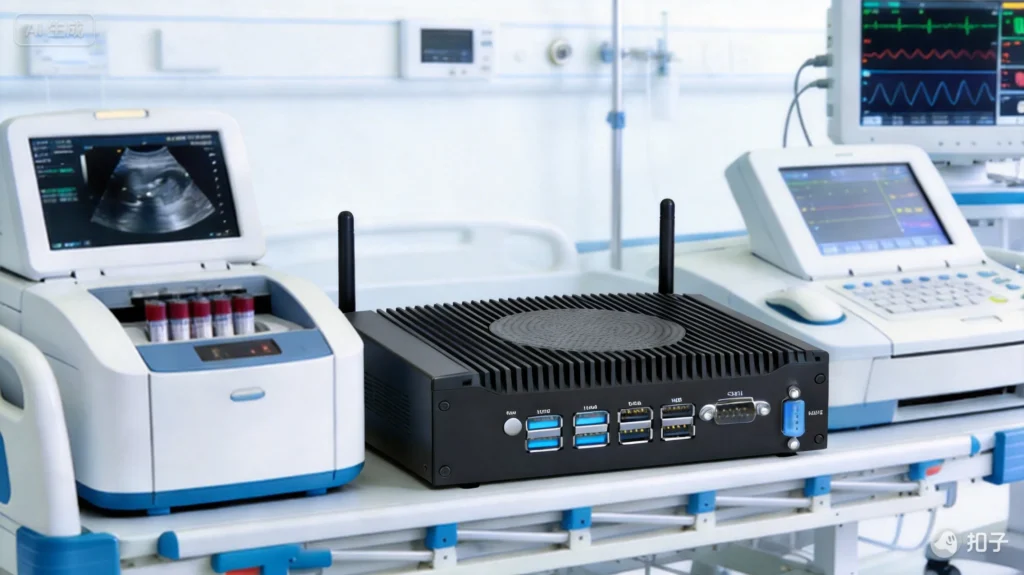
Application Overview: Medical-grade Mini PCs power diagnostic equipment, patient monitoring systems, and hospital information terminals.
Key Requirements:
- Low electromagnetic interference (EMI) emissions
- Compliance with medical device regulations (IEC 60601)
- Antibacterial or antimicrobial casing options
- Fanless design for sterile environments
Deployment Examples:
- Portable ultrasound or X-ray imaging systems
- Nursing station communication terminals
- Telemedicine consultation stations
6. Energy Monitoring: Wide Temperature Mini PC for Utility Infrastructure
Application Overview: Power plants, renewable energy installations, and utility infrastructure require rugged computing solutions for monitoring and control.
Key Requirements:
- Extended temperature range for outdoor deployment
- Industrial communication protocols (Modbus, DNP3)
- Low power consumption for remote deployments with solar power
Deployment Examples:
- Solar inverter monitoring systems
- Smart grid edge computing nodes
- Oil and gas pipeline monitoring stations
Industrial Mini PC Selection Criteria: Technical Specifications Guide
Processor Selection: Intel vs AMD vs ARM for Industrial Mini PCs
Intel-based Solutions: Recommended for applications requiring compatibility with existing Windows-based industrial software. Intel Celeron, Core i3, i5, and i7 processors offer established performance benchmarks and driver support.
AMD-based Solutions: Offer competitive performance-per-watt ratios, ideal for edge computing applications where power efficiency is critical.
ARM-based Solutions: Best suited for ultra-low power applications and deployments requiring Linux-based custom software stacks.
Memory and Storage: RAM & SSD Configuration for Industrial Applications
| Application Type | RAM Requirement | Storage Type | Capacity Recommendation |
|---|---|---|---|
|
Basic Automation |
4GB-8GB |
eMMC or SSD |
64GB-256GB |
|
Machine Vision |
16GB-32GB |
NVMe SSD |
512GB-1TB |
|
Edge Analytics |
32GB-64GB |
NVMe SSD RAID |
1TB-2TB |
|
Digital Signage |
8GB-16GB |
SSD |
256GB-512GB |
Industrial Connectivity: LAN, COM Ports, GPIO, CAN Bus, and Wireless Options
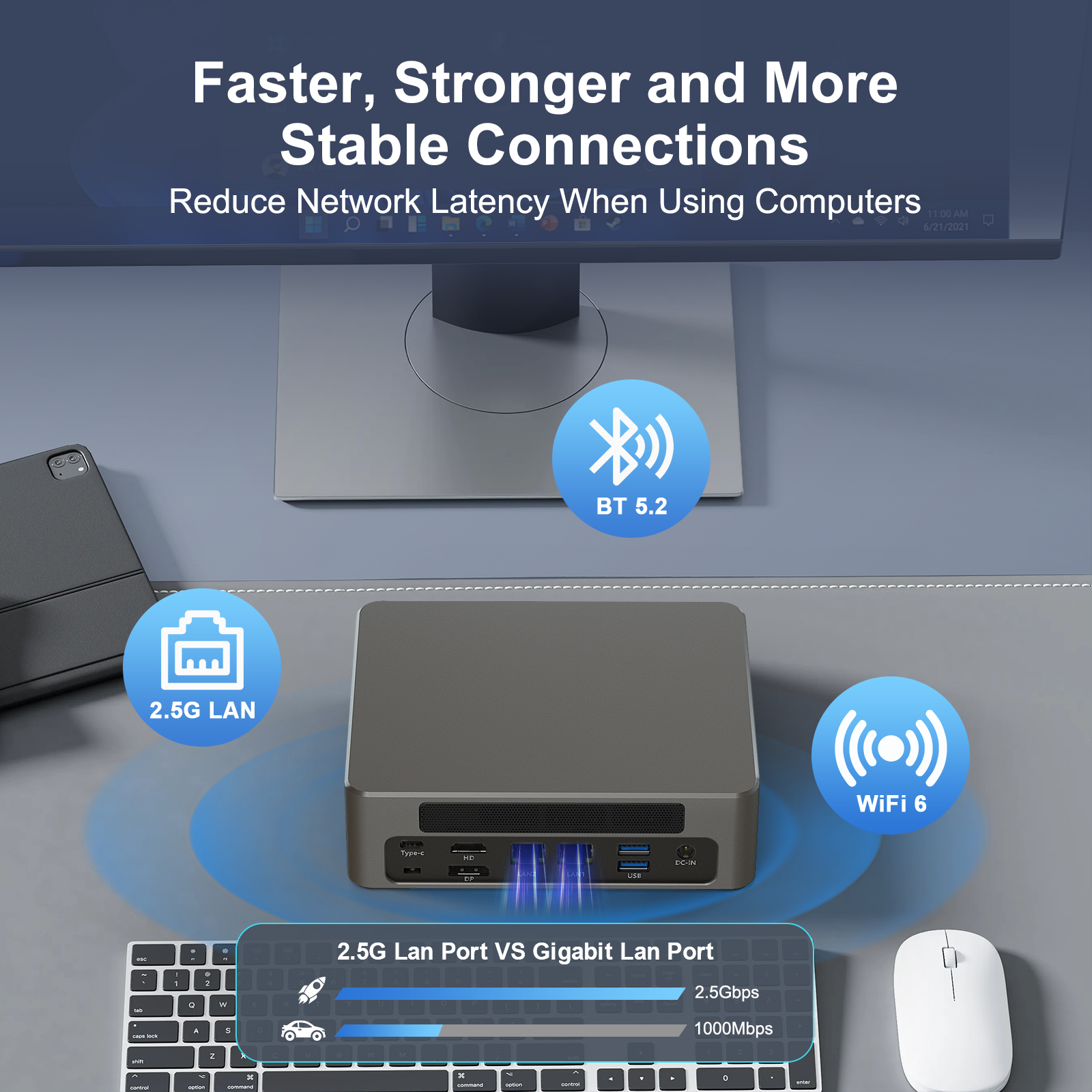
Wired Networking: Industrial applications require Gigabit Ethernet ports with PoE (Power over Ethernet) support. For mission-critical deployments, dual LAN ports enable network redundancy.
Wireless Connectivity: Wi-Fi 6/6E and 5G/LTE modules provide flexibility for remote monitoring and mobile deployments.
Industrial Interfaces: RS232, RS485, GPIO, CAN bus, and digital I/O are essential for connecting to legacy equipment and industrial sensors.
Environmental Ratings: IP65/IP67 and Wide Temperature Mini PC Standards
IP65/IP67: Required for outdoor deployments or environments with dust and water exposure.
Wide Temperature Models: Essential for extreme climate installations without climate control.
Procurement Checklist: B2B Buyer Guide for Industrial Mini PC Bulk Orders
Pre-Purchase Assessment
Environmental Analysis: Define operating temperature range, humidity levels, and exposure to dust/water
Power Requirements: Confirm available power input (AC vs. DC, voltage range)
Software Compatibility: Verify OS compatibility (Windows 10/11 IoT, Linux distributions) and required drivers
Connectivity Inventory: Map required interfaces and communication protocols
Deployment Scale: Calculate total units needed and projected expansion
Vendor Evaluation: Industrial PC Manufacturer Selection and Compliance
Certification Compliance: CE, FCC, UL, and industry-specific certifications (automotive, medical, marine)
Warranty Terms: Standard warranty duration (typically 3-5 years for industrial units)
Lifecycle Management: Commitment to long-term component availability (typically 5-7 years)
Customization Options: Logo placement, BIOS customization, and I/O configuration flexibility
Technical Support: Response time, availability of engineering assistance, and documentation quality
Total Cost of Ownership Considerations
Initial Acquisition Cost: Hardware price per unit
Deployment Cost: Installation labor, mounting hardware, and cabling
Maintenance Cost: Expected failure rates, MTBF (Mean Time Between Failures), and replacement procedures
Energy Consumption: Annual power cost per unit
End-of-Life Disposal: Recycling and compliance with WEEE directives
Industrial Mini PC Comparison: 5 Model Categories with Specs and Applications
| Model Category | Processor Range | Temperature | I/O Ports | Power Consumption | Best For |
|---|---|---|---|---|---|
|
Entry-Level Fanless |
Intel Celeron J4125 / N5105 |
-20°C to 60°C |
2×COM, 4×USB, 2×LAN |
15W |
Basic automation, kiosks |
|
Mid-Range Industrial |
Intel Core i3-1115G4 / i5-1135G7 |
-20°C to 70°C |
4×COM, 6×USB, 2×LAN, GPIO |
35W |
Factory automation, SCADA |
|
High-Performance |
Intel Core i7-1165G7 / AMD Ryzen 7 |
-20°C to 70°C |
2×COM, 4×USB, 4×LAN |
65W |
Machine vision, edge AI |
|
Extreme Environment |
Intel Core i5 with heater |
-40°C to 85°C |
4×COM, 4×USB, 2×LAN |
45W |
Outdoor, transportation, energy |
|
Medical Grade |
Intel Core i5 with EMI shielding |
0°C to 50°C |
2×COM, 6×USB, isolated I/O |
30W |
Healthcare, diagnostic equipment |
Related HYSTOU Products by Application
Based on the industrial mini pc applications outlined above, HYSTOU offers specialized solutions for each deployment scenario:
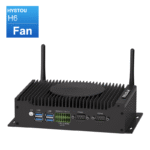
- H6 Industrial Fan-Cooled Mini PC – Designed for factory automation and triple-display SCADA systems
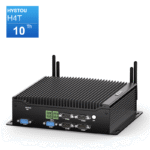
- H4T Fanless Industrial Mini PC – Ideal for smart manufacturing edge computing with dust-proof operation
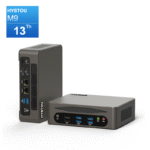
- M9 Mini PC Intel i5-1340P – Cost-effective solution for digital signage and kiosk deployments
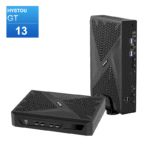
- RTX 3050 Mini Workstation PC – High-performance option for machine vision and AI inference
Future Trends: AI Edge Computing, 5G, and Energy-Efficient Industrial PCs
AI Edge Computing Integration
The integration of specialized AI accelerators (Intel Movidius, Google Coral, NVIDIA Jetson) into Mini PC form factors enables real-time machine learning inference at the edge. Applications include predictive maintenance, anomaly detection, and computer vision quality control.
5G and LPWAN Connectivity
As 5G networks roll out across Europe and North America, Mini PCs with integrated 5G modems will enable ultra-low latency industrial applications and massive IoT deployments.
Energy Efficiency Optimization
Next-generation industrial Mini PCs will focus on reduced power consumption through advanced thermal management, low-power processors, and intelligent power management features—critical for sustainable manufacturing initiatives.
Frequently Asked Questions
What is the difference between industrial Mini PCs and consumer mini computers?
Industrial Mini PCs are engineered for harsh environments with wide temperature ranges, fanless cooling, industrial interfaces (COM ports, GPIO), and 24/7 continuous operation capabilities. Consumer mini-computers lack these ruggedization features and industrial connectivity options.
Can industrial Mini PCs run standard Windows software?
Yes, most industrial Mini PCs with Intel processors are compatible with Windows 10/11 IoT and standard Windows applications. However, verify specific driver availability for required industrial interfaces.
What is the typical lifespan of an industrial Mini PC?
Industrial Mini PCs are designed for lifespans of 5-7 years, with components selected for long-term availability. This contrasts with consumer-grade mini computers typically designed for 2-3 year lifecycles.
How do I choose between fanless and fan-cooled designs?
Choose fanless designs for environments with dust, debris, or where maintenance access is limited. Fan-cooled designs offer higher performance for demanding applications like machine vision and AI inference, but require periodic maintenance.
What certifications should I look for?
For EU deployment, verify CE compliance. For US deployment, ensure FCC certification. Industry-specific certifications include IEC 60601 (medical), ISO 7637 (automotive), and EN 50155 (railway).
Can industrial Mini PCs be customized for bulk orders?
Yes, most industrial Mini PC manufacturers offer customization options, including BIOS branding, I/O port configuration, wireless module selection, and pre-installed OS configurations for bulk procurement.
About HYSTOU
HYSTOU has established its R&D headquarters in Shenzhen, drawing on over a decade of experience. Our core team members, who previously served at renowned companies such as Inventec and Quanta Computer, form the backbone of our technical expertise. With robust R&D and innovation capabilities, we remain steadfast in our commitment to pursuing excellence in the field of technology products.

HYSTOU
HYSTOU has established its R&D headquarters in Shenzhen, drawing on over a decade of experience. Our core team members, who previously served at renowned companies such as Inventec and Quanta Computer, form the backbone of our technical expertise. With robust R&D and innovation capabilities, we remain steadfast in our commitment to pursuing excellence in the field of technology products.